Your Gut and Your Knees Talk to Each Other More Than You Think
When your knees ache, the last thing you probably think about is your diet—let alone something as ordinary as dietary fiber. Most of us write fiber off as “that stuff that keeps you regular.”
But as an endocrinologist who has spent years watching how food reshapes hormones, inflammation, and metabolism, I can tell you fiber is quietly one of the most powerful anti-inflammatory tools you already have in your kitchen.
Here’s the short version: chronic low-grade inflammation is a major driver of knee pain and arthritis flare-ups. And the trillions of bacteria living in your gut—the ones that feast on the power of fiber—produce anti-inflammatory compounds that travel through your bloodstream and calm things down all over your body, joints included. Feed those bacteria well, and they can literally help your joints hurt less.
Why Inflammation Is the Real Culprit Behind Most Knee Pain
Arthritis isn’t just “wear and tear.” Osteoarthritis, the most common kind affecting knees, involves active inflammation inside the joint. Immune cells release chemicals that break down cartilage and irritate nerve endings, which is why your knees can feel stiff in the morning or swollen after a long walk. If you’ve ever wondered why knees hurt even when you haven’t injured them, systemic inflammation is usually part of the answer.
The tricky part is that inflammation doesn’t stay local. Body fat—especially belly fat—behaves like an inflammatory organ, pumping out inflammatory proteins around the clock. Poor blood sugar control does the same thing. So when patients come to me with joint pain, I always look at the whole metabolic picture, not just the knee. That’s exactly where fiber enters the story.
How Fiber Actually Fights Inflammation
Fiber works through several pathways at once, and each one matters for your joints:
- It feeds your good gut bacteria. Fermentable fiber is broken down by gut microbes into short-chain fatty acids, especially butyrate. Butyrate signals your immune system to stand down, lowering inflammatory markers like CRP and IL-6—two chemicals that are consistently elevated in people with arthritis.
- It steadies your blood sugar. Fiber slows carbohydrate absorption, so you avoid the spikes that trigger inflammation. Keeping your blood sugar steady protects blood vessels, including the tiny ones that nourish joint tissue.
- It helps you feel full with fewer calories. Less overeating means less extra weight, and every pound you carry multiplies the load on your knee joints.
- It binds inflammatory toxins. Certain fibers help escort inflammatory byproducts and excess cholesterol out of the body before they circulate and cause damage.
Research backs this up. A large analysis published in the Annals of the Rheumatic Diseases followed thousands of adults and found that people eating around 20+ grams of fiber a day had a significantly lower risk of knee arthritis symptoms compared with those eating barely 8 grams. Another study using fiber supplements showed measurable improvements in reported knee pain within weeks. The effect isn’t magic—it’s biology.
The Weight Connection: Why Every Pound Counts
Here’s a number my patients never forget once they hear it: every extra pound of body weight puts roughly four pounds of pressure on your knees with every step. Twenty extra pounds means your knees absorb about eighty extra pounds of force thousands of times a day. No wonder they complain.
Fiber is the most underrated weight-loss tool in medicine. High-fiber foods are bulky, filling, and slow to digest, so you stay satisfied longer and naturally eat less without white-knuckle willpower.
Combined with a sensible calorie deficit, fiber makes losing weight—and keeping it off—far more realistic. And if you’re struggling with weight as you get older, fiber becomes even more valuable, because metabolic rate slows while joint stress speeds up.
The payoff compounds quickly. Studies show that losing just 10% of body weight can cut knee pain in half for many people with arthritis. Fiber won’t do it alone, but it’s the easiest habit to start today.
Fiber and Blood Sugar: The Hidden Arthritis Accelerator
Most people don’t connect diabetes and joint damage, but the link is strong. Persistently high glucose stiffens collagen—the very protein your cartilage is built from—through a process called glycation. Sugar essentially caramelizes joint tissue over time. High insulin levels also amplify inflammation. That’s why keeping blood sugar under control is genuinely a joint-protecting strategy.
Fiber is the single most effective dietary lever for this. Viscous fibers like those in oats and beans blunt the glucose rise after a meal. Legumes are so effective that a simple serving can improve glucose numbers—research even suggests beans can help lower readings for hours afterward.
And if you’re prediabetic, knowing exactly what to eat and what to skip can stop the progression before it damages both your metabolism and your knees.
The Best Fiber-Rich Foods for Happier Knees
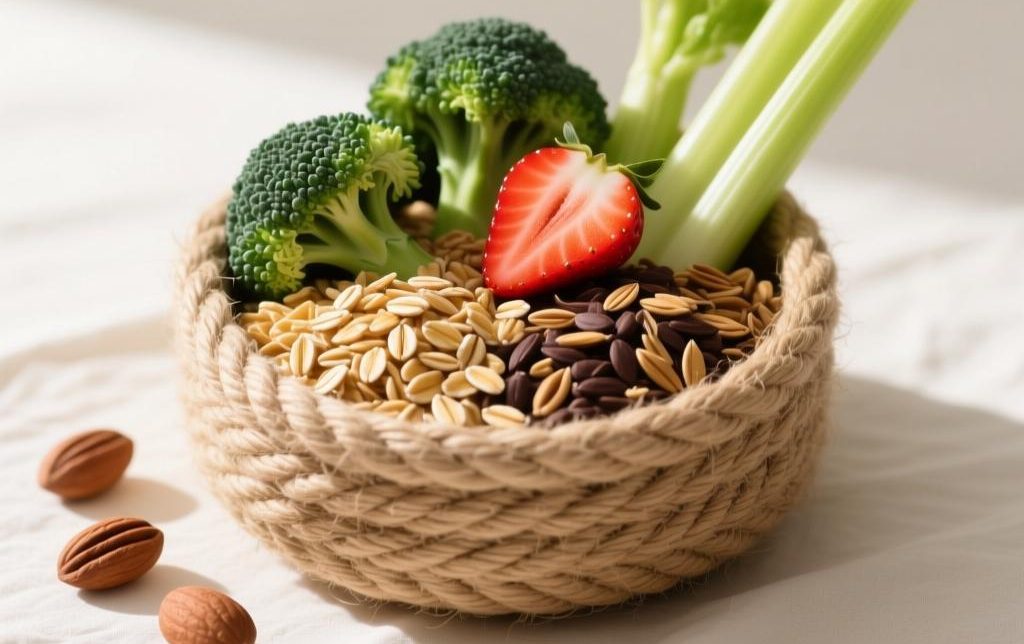
Not all fiber sources are equal. Aim for variety so you feed different bacterial families and get both soluble and insoluble fiber:
| Food | Fiber (per serving) | Joint-Friendly Bonus |
|---|---|---|
| Black beans (1 cup cooked) | ~15 g | Steadies blood sugar, feeds gut bacteria |
| Lentils (1 cup cooked) | ~15 g | Rich in folate, supports methylation and repair |
| Chia seeds (2 tbsp) | ~10 g | Omega-3s add anti-inflammatory power |
| Raspberries (1 cup) | ~8 g | Ellagitannins act as natural antioxidants |
| Oatmeal (1 cup cooked) | ~4 g | Viscous fiber lowers cholesterol and CRP |
| Berries, apples, pears with skin | 3–5 g each | Polyphenols calm inflammatory pathways |
| Broccoli, Brussels sprouts | 3–5 g per cup | Sulforaphane may slow cartilage breakdown |
If getting fiber feels hard on a low-carb plan, you’re not stuck—there are 12 easy ways to fit in enough fiber even on keto. You can also start your day smart: a small swap your breakfast move—oats or chia pudding instead of refined cereal—can change both the scale and your glucose levels within a week.
And nature makes it pleasant: delicious fruits like berries, apples, and pears deliver fiber with a glycemic-friendly footprint. For dinner ideas, sweet potatoes and other whole-food carbs keep meals satisfying without inflammatory spikes.
Need ready-made inspiration? Try these high fiber recipes designed to slim you down while keeping meals genuinely tasty.
How Much Fiber Do You Actually Need?
The official targets are 25 grams daily for women and 38 grams for men, yet the average adult gets only about 15 grams. That gap—what researchers call the “fiber gap”—leaves your gut bacteria underfed and your inflammation thermostat turned up.
| Person | Daily Fiber Goal | Typical Actual Intake |
|---|---|---|
| Adult women (under 50) | 25 g | ~13–15 g |
| Adult men (under 50) | 38 g | ~17–19 g |
| Women 50+ | 21 g | ~14 g |
| Men 50+ | 30 g | ~17 g |
Don’t jump from 15 grams to 35 overnight. Gut bacteria need time to build the machinery that ferments fiber, and ramping up too fast causes gas and bloating. Add 5 grams per week, drink plenty of water, and let your digestive system adapt.
Simple Ways to Sneak In More Fiber Every Day
- Keep the skin on. Potato and apple skins hold a large share of the fiber and polyphenols.
- Swap white for whole. Whole-grain bread, brown rice, and steel-cut oats deliver 2–4 times the fiber of refined versions.
- Make beans the base. Half a cup of beans tossed into soup, salad, or tacos adds 6–8 grams effortlessly.
- Snack on nuts and fruit. A pear plus a small handful of almonds adds about 10 grams between meals.
- Blend, don’t juice. Juicing strips out the fiber; whole fruit keeps it intact.
- Choose vegetables first. Fill half your plate with plants before adding anything else.
And remember: you don’t have to eat perfectly every single day. The goal is to eat well most of the time without turning meals into a source of stress.
Fiber Isn’t the Whole Story—But It’s a Great Start
I want to be honest with you: fiber is a helper, not a cure. Arthritis is a structural disease, and no amount of beans will regrow cartilage that’s already gone. But fiber meaningfully lowers the inflammatory fire that makes existing damage hurt more, and it makes weight loss and blood sugar control dramatically easier—two of the biggest levers we have for knee health.
Pair it with movement, because motion truly is lotion: research consistently shows that moving more is often exactly what your aching joints need, even when it feels counterintuitive. If you’re active, protect your knees while exercising—there are proven ways to care for sore knees without giving up the activities you love.
Some patients also combine dietary changes with targeted nutrients that help your joints, like collagen and omega-3s. For a broader natural toolkit, these arthritis pain strategies work well alongside a fiber-rich diet.
And if joints stay red, hot, and swollen for weeks, see your doctor—significant swelling needs proper evaluation, and certain arthritic conditions like gout respond to their own specific dietary rules, so a smart gout diet matters if that’s your diagnosis.
FAQs
How long before fiber helps my knee pain?
Most people notice digestive changes within days, but anti-inflammatory effects build gradually. Give it 6–12 weeks of consistent high-fiber eating, plus any weight loss that comes with it, before judging results. Many patients report meaningfully less stiffness by month three.
Can fiber supplements work instead of food?
Partially. Supplements like psyllium can genuinely help and were used in positive clinical trials, but whole foods deliver polyphenols, vitamins, and minerals that supplements miss. Food first, supplements to fill gaps.
Will eating more fiber upset my stomach?
At first, possibly. Bloating and gas are common when you ramp up quickly. Increase slowly, spread fiber across meals, and drink extra water. Symptoms usually fade within a couple of weeks as your gut adapts.
Is there anyone who shouldn’t increase fiber?
People with certain digestive conditions—like strictures, severe IBD flares, or a history of bowel obstruction—should talk with their doctor first. For most adults, more fiber is safe and beneficial.
Do fiber and blood sugar really connect to arthritis?
Yes. High glucose stiffens collagen in cartilage, and insulin resistance amplifies inflammation. Keeping blood sugar in check—with fiber as your daily ally—protects joints over the long run.
What’s the single best first step?
Eat one fiber-rich food at every meal starting tomorrow: oats at breakfast, beans at lunch, vegetables at dinner. That alone can add 10–15 grams to your daily total and start shifting your inflammation within weeks.