If you’re keeping an eye on your blood sugar, you’ve probably given the fruit bowl a suspicious side-eye at least once. Somewhere along the way, fruit got labeled as “nature’s candy,” and people started treating a banana like a chocolate bar.
As a nutritionist, I hear this worry all the time, and I’m happy to set the record straight: the right fruits can genuinely be your allies. They deliver fiber, antioxidants, vitamins, and natural sweetness that makes balanced eating feel enjoyable instead of restrictive.
In this guide, you’ll meet nine fruits that help keep blood sugar steady, learn why they work, and get honest answers to the questions I hear most. Spoiler alert: fruit is back on the menu — you just need to know which ones and how to eat them.
Why Fruit Gets Blamed for Blood Sugar Spikes?
Let’s clear up the confusion first. Fruit contains natural sugar, so it’s easy to assume it behaves like dessert. But fruit isn’t just sugar in a pretty package. It arrives bundled with fiber, water, vitamins, and plant compounds that slow down how quickly that sugar hits your bloodstream.
Eating a candy bar is like pouring water through a funnel — everything rushes through at once. Eating whole fruit is more like a slow drip. The fiber acts as a speed bump, the water dilutes the sugar, and actually chewing a real apple naturally slows you down.
From my nutritionist chair, the bigger problem I see isn’t fruit — it’s what happens when people cut it out. Cravings for sweetness don’t disappear just because you banned bananas, so most folks end up grabbing cookies, sweetened yogurt, or “sugar-free” snacks full of additives instead.
A bowl of berries is a far better landing spot. From a busy parent’s perspective, fruit is also the original grab-and-go snack: no wrapper, no prep, no guilt.
And from a flavor lover’s perspective, fruit lets you sweeten oatmeal, yogurt, and salads naturally, so you lean less on added sugar. In other words, fruit doesn’t just avoid spiking your blood sugar — it actively helps you eat better overall.
9 Fruits That Keep Your Blood Sugar Steady
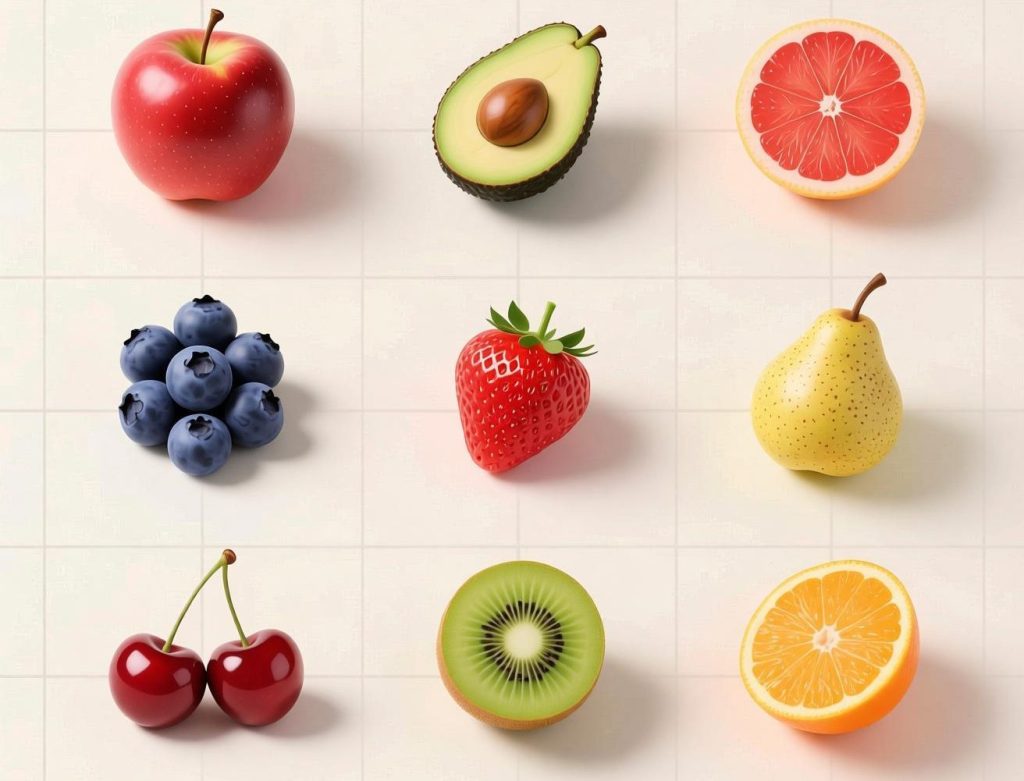
Here are the nine fruits I recommend most often, with a little context on why each one earns its spot in your shopping cart.
1. Blueberries
These little gems are famous for their anthocyanins — the plant pigments behind that deep blue color. Research links regular berry eating with better insulin sensitivity, meaning your body handles sugar more gracefully.
One cup of blueberries also brings about four grams of fiber, plus they’re wonderfully low in calories. Toss them into oatmeal, blend them into a smoothie with Greek yogurt, or enjoy them by the frozen handful — usually friendlier on the wallet than fresh.
2. Strawberries
A cup of strawberries serves up more vitamin C than an orange with only about seven grams of sugar. Their bright red color comes from antioxidants that help fight inflammation, and their fiber keeps the sugar release gentle.
They’re also one of the most satisfying fruits to eat — sweet, juicy, and fragrant. Slice them onto plain yogurt, mash them into chia pudding, or just rinse and enjoy. If fresh berries go moldy too fast in your kitchen, buy frozen; they’re picked at peak ripeness and lock in the nutrients.
3. Apples
An apple a day really does have something going for it. A medium apple delivers around four and a half grams of fiber, much of it in the skin, so don’t peel it. That skin contains pectin, a soluble fiber that slows digestion and helps steady glucose after meals.
Apples are also crunchy and filling, which makes them a natural portion-control food — it takes real effort to overeat apples. Pair one with peanut butter or a slice of cheese, and you’ve got a near-perfect snack that bridges lunch and dinner.
4. Pears
Pears are the quiet overachievers of the fruit world. A medium pear packs roughly five and a half grams of fiber — more than most fruits on this list — and that fiber does a beautiful job of slowing sugar absorption.
Pears also have a low glycemic index, meaning their natural sweetness arrives gently rather than all at once. Their soft, honeyed flavor makes them feel like dessert. Enjoy one sliced with a sprinkle of cinnamon, bake one for a warm evening treat, or add cubes to a salad with walnuts.
5. Oranges
Here’s where I put on my myth-busting hat: an orange and a glass of orange juice are not the same food. A whole orange gives you fiber, water, and a satisfying chew for about 60 calories.
The juice strips out the fiber and concentrates the sugar into a form your body absorbs quickly. So eat the orange, skip the juice. Oranges also support your immune system with vitamin C and travel anywhere — nature’s original snack pack.
6. Cherries
Cherries, especially the tart varieties, carry the same anthocyanins as blueberries, which studies connect to better blood sugar control and less inflammation. They’re also one of the few natural sources of melatonin, so a small bowl in the evening does double duty.
The trick with cherries is portion — they’re easy to mindlessly munch, so pre-portion a cup rather than eating straight from the bag. Fresh or frozen, they’re wonderful stirred into yogurt, smoothies, and overnight oats.
7. Kiwi
Don’t let the fuzzy skin fool you — kiwi is a blood-sugar-friendly powerhouse. One kiwi offers a solid dose of fiber, a full day’s vitamin C, and early research suggesting it may help steady glucose after meals.
Kiwi is also gentle on digestion thanks to an enzyme that helps break down protein, which makes it a lovely after-dinner fruit. The simplest way to eat one? Cut it in half and scoop with a spoon.
8. Peaches
A ripe peach in summer is one of life’s simple pleasures, and happily, it’s a smart one too. Peaches sit low on the glycemic index, are loaded with water, and offer antioxidants that support metabolic health.
One medium peach contains only about 13 grams of natural sugar, cushioned by fiber. They’re fantastic sliced into cottage cheese, blended into a protein smoothie, or grilled for a caramelized dessert that needs zero added sugar.
9. Avocado
Surprise — avocado is a fruit, and it might be the most blood-sugar-friendly one of all. Avocados contain virtually no sugar and are rich in heart-healthy monounsaturated fats and fiber, a combination that keeps glucose beautifully stable.
Research even suggests adding avocado to a meal can blunt the glucose spike that follows. Spread it on whole-grain toast, mash it into guacamole, or blend half into a smoothie for a silky texture. If you haven’t tried avocado in a chocolate smoothie, you’re missing one of nutrition’s best-kept dessert secrets.
A Quick Cheat Sheet You Can Save
Here’s the whole lineup at a glance, so you can screenshot it before your next grocery run:
| Fruit | Fiber (approx. per serving) | Best Way to Enjoy |
|---|---|---|
| Blueberries | 4 g per cup | In oatmeal or yogurt |
| Strawberries | 3 g per cup | Sliced on breakfast bowls |
| Apple | 4.5 g per medium fruit | With nut butter or cheese |
| Pear | 5.5 g per medium fruit | Baked with cinnamon |
| Orange | 3 g per medium fruit | Whole, never juiced |
| Cherries | 3 g per cup | Pre-portioned as a snack |
| Kiwi | 2 g per fruit | Scooped straight from the skin |
| Peach | 2.5 g per medium fruit | Grilled or in smoothies |
| Avocado | 6.7 g per half | On toast or blended smooth |
Notice the pattern? Every winner here is either high in fiber, low in sugar, or rich in healthy fat — usually a mix of two out of three.
How to Eat Fruit the Smart Way

Knowing which fruits to choose is half the battle. The habits below are the other half — the difference between good fruit choices and great blood sugar results:
- Mind the portion. One serving is roughly a cup of berries, one medium apple, or one small banana. Fruit is your friend, not an all-you-can-eat buffet.
- Pair it with protein or fat. A few almonds, a cube of cheese, or a spoonful of Greek yogurt slows sugar absorption even further and keeps you full longer.
- Choose whole over juice. Juicing removes the fiber and concentrates the sugar — eat the fruit instead of drinking it.
- Blend, don’t juice. If you love smoothies, blending whole fruit keeps the fiber, especially when you leave the skin on pears and apples.
- Don’t fear frozen. Frozen fruit is picked ripe and flash-frozen, locking in nutrients at a lower price with zero prep.
One habit worth building: enjoy fruit as part of a balanced meal rather than alone on an empty stomach. When fiber, protein, and fat are already in your stomach, fruit’s natural sugar is absorbed on the gentlest possible timeline.
Can I Still Eat Fruit If I Have Diabetes or Prediabetes?
Absolutely — with a little strategy. Whole, fiber-rich fruits are linked with better glucose control, not worse. The keys are sensible portions, choosing low-glycemic options like the nine above, and pairing fruit with protein or healthy fat.
A registered dietitian can personalize your carb targets, but for most of my clients, one or two servings of whole fruit a day fits beautifully within the plan. What raises blood sugar faster is juice, large amounts of dried fruit, and canned fruit swimming in syrup — keep those as occasional treats, not daily habits.
Is Fruit Juice Just as Good as Whole Fruit?
Honestly? No. A glass of orange juice can pack the sugar of three or four oranges with almost none of the fiber, and you can drink it in ninety seconds without your body registering fullness. Liquid sugar moves fast, which is exactly what you don’t want when you’re caring for your blood sugar.
Whole fruit comes with a built-in braking system — chewing, fiber, and water — that juice strips away. If you love a morning smoothie, blend whole fruit rather than juicing it, keep the portion modest, and add protein to slow things down further.
What’s the Best Time of Day to Eat Fruit?
There’s no magic hour, so let’s bust that myth. What matters far more is what the fruit travels with. Eating fruit after a balanced meal — when fiber, protein, and fat are already in your stomach — produces a gentler glucose response than eating it alone first thing in the morning.
If your sweet tooth calls at 3 p.m., a peach or an apple with peanut butter is a far better answer than the vending machine. And if you’re active, fruit before or after a workout is well-timed, since your muscles happily put that sugar to work.
Food should feel like care, not punishment — and fruit fits that philosophy perfectly. Keep your kitchen stocked with these nine friendly fruits, pair them wisely, watch your portions, and let natural sweetness do its quiet work. Your blood sugar (and your taste buds) will thank you.