Getting a diabetes diagnosis often comes with one gut-punch of a thought: “That’s the end of cake, cookies, and ice cream, isn’t it?” Take a deep breath — the answer is no. As a nutritionist, one of my favorite moments is watching a client’s face light up when I tell them dessert isn’t off the menu.
What changes isn’t whether you get to enjoy something sweet; it’s how you build that sweetness. With smarter ingredients, sensible portions, and a little mealtime strategy, you can satisfy your sweet tooth while keeping your blood sugar on an even keel.

You Can Still Have Dessert with Diabetes
If you’re still holding onto old advice that people with diabetes must avoid every gram of sugar, let’s retire it. Modern diabetes care is about the bigger picture: how many total carbohydrates you eat, the quality of those carbs, and how your blood glucose responds to them.
Your body converts all carbohydrates — whether from table sugar, white bread, or an apple — into glucose. What separates a blood sugar disaster from a non-event is how quickly that glucose arrives and how much of it shows up at once.
Context matters enormously. A slice of angel food cake eaten after a balanced dinner of grilled chicken and salad behaves very differently in your bloodstream than the same cake scarfed down on an empty stomach.
Protein, fiber, and fat slow digestion, so glucose trickles in rather than flooding your system. That single fact unlocks a whole world of dessert possibilities, because it’s rarely the dessert itself that causes trouble — it’s the context around it.
Here’s a mindset shift that helps my clients: think of carbs like a daily budget. If you know a small treat is coming after dinner, spend a little less on dinner rolls or starchy sides and save room for dessert. That’s not restriction; that’s planning.
Total deprivation tends to backfire anyway — people who swear off sweets entirely often end up face-first in a cookie tin a few weeks later. A planned, satisfying portion keeps both your cravings and your glucose happier.
One more thing: everyone responds to the same dessert a little differently. Metabolism, medication, activity level, and even gut bacteria all play a role. If you use a continuous glucose monitor, you have a front-row seat to your own data — trust it.
If you don’t, an occasional fingerstick check two hours after a treat tells you plenty. Your meter is a more reliable guide than any rule of thumb you’ll find online, including mine.
What Actually Happens When You Eat Something Sweet?
Quick, non-textbook science lesson. When you eat a dessert loaded with refined sugar and white flour, those carbohydrates convert to glucose almost immediately and rush into your bloodstream. In someone without diabetes, insulin shows up like an efficient cleanup crew, escorting glucose out of the blood and into cells.
With diabetes, that system doesn’t work properly — glucose lingers, climbing higher and staying elevated longer than it should. Those repeated spikes are what wear on blood vessels and nerves over time.
The fix isn’t banning sweetness. It’s slowing it down. Four things decide how fast a dessert hits your system:
- Refined sugar and white flour digest fastest, sending glucose up in a hurry.
- Fiber acts like a speed bump — whole fruits, oats, and nuts slow sugar absorption.
- Protein and fat delay stomach emptying, softening the glucose spike.
- Portion size matters too — double the serving means double the sugar load.
So the perfect diabetes-friendly dessert formula is refreshingly simple: a modest portion, slow-digesting ingredients, and ideally something in your stomach besides the dessert itself. Keep those three boxes checked and nearly any treat can be re-engineered.
Smart Swaps That Make Desserts Diabetes-Friendly
You don’t need a culinary degree to give your favorite desserts a blood-sugar-friendly makeover. Most of the magic happens with a handful of one-for-one ingredient swaps. Over time these become second nature — and honestly, plenty of my clients end up preferring the updated versions.
- White flour → almond flour or oat flour: more protein, fiber, and healthy fats, with far fewer blood-sugar-spiking carbs.
- Sugar → monk fruit, stevia, or allulose: genuine sweetness with little to no impact on your glucose.
- Milk chocolate → dark chocolate (70%+ cacao): less sugar, more fiber, and a richer flavor that satisfies with a smaller piece.
- Ice cream → Greek yogurt-based frozen treats: protein plus creaminess at a fraction of the sugar.
- Buttercream frosting → lightly sweetened whipped cream cheese or coconut cream: all the richness, none of the sugar bomb.
- Traditional pie crust → crushed nut or oat crust: adds fiber and healthy fat to every slice.
Start with one swap per recipe rather than overhauling everything at once — baking is chemistry, and ratios matter. The good news? The internet is full of tested low-sugar versions of nearly every classic dessert, from brownies to cheesecake to apple crisp.
Desserts That Play Nice with Your Blood Sugar
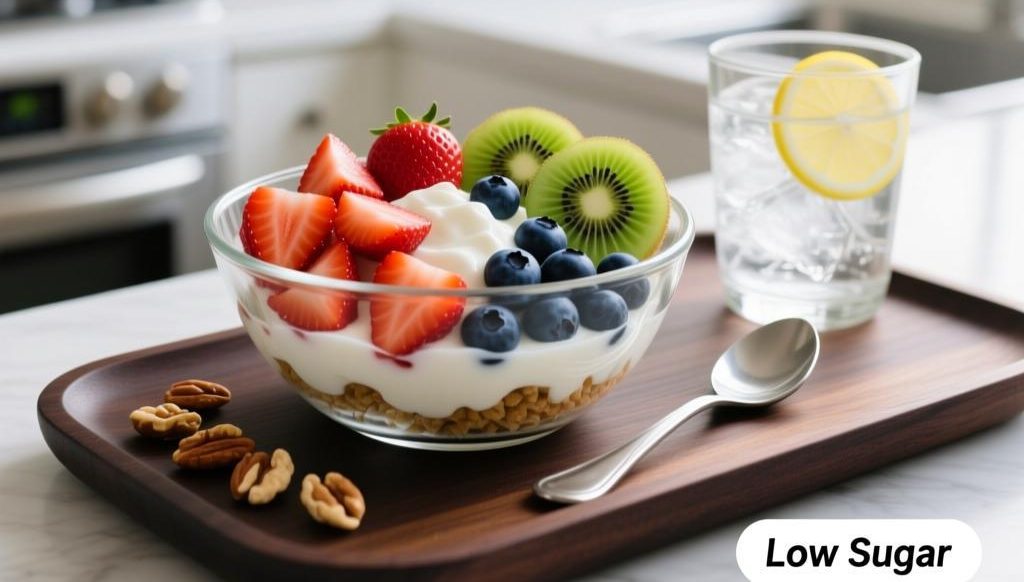
When clients ask what to actually make tonight, this is the shortlist I share. Every option is built on whole-food ingredients, little to no added sugar, and the fiber-protein-fat trio that keeps glucose steady.
| Dessert | Why It Works | Smart Serving Tip |
|---|---|---|
| Berries with whipped cream | High fiber, antioxidants, and a naturally low sugar load | Keep berries to about ¾ cup; whip the cream yourself, unsweetened |
| Dark chocolate square | Low sugar, rich flavor, plus fiber and antioxidants | One or two squares of 70%+ cacao, savored slowly |
| Chia seed pudding | Fiber and omega-3 fats slow digestion dramatically | Mix with unsweetened almond milk the night before |
| Greek yogurt parfait | Protein blunts glucose spikes and keeps you full | Layer plain yogurt, berries, and chopped nuts |
| Baked apple with cinnamon | Whole-fruit fiber plus warm, cozy comfort | Skip added sugar; cinnamon does the flavor heavy lifting |
| Avocado chocolate mousse | Healthy fats create a silky texture with no sugar needed | Top with a few cacao nibs for crunch |
| Peanut butter oat cookies | Protein and fiber combo with no refined sugar | Enjoy one cookie with tea after dinner |
| Frozen banana “nice cream” | Creamy satisfaction straight from whole fruit | Half a banana blended with a spoonful of Greek yogurt |
If I had to crown one MVP, it would be the humble chia pudding. Two tablespoons of chia seeds deliver around ten grams of fiber — a genuine blood sugar bodyguard — plus plant-based omega-3 fats and a bit of protein.
Stir them into unsweetened almond milk with a splash of vanilla, let it sit overnight, and a creamy, dessert-worthy breakfast is waiting in the morning. Top with fresh raspberries and a few sliced almonds for crunch. It barely moves the needle on a glucometer, and it actually keeps you full.
Quick portion reality check: even friendly desserts count toward your carb totals. A sensible target is keeping a treat around 15–30 grams of carbohydrates, which fits comfortably within most meal plans. When a label exists, read it; when it doesn’t, a quick estimate in a nutrition app takes seconds and removes the guesswork.
How to Enjoy Dessert Without the Blood Sugar Rollercoaster
Ingredients are only half the game — the other half is strategy. These are the habits that let my clients enjoy dessert regularly without wrecking their numbers:
- Never eat dessert on an empty stomach. After a meal, glucose rises as a gentle hill; on an empty stomach, it’s a rocket launch.
- Plate it properly. One serving on a small dish looks and feels more satisfying than the “missing” portion you ate straight from the container.
- Pair it with protein. A spoonful of Greek yogurt, a few nuts, or a slice of cheese alongside further softens the spike.
- Take a 10–15 minute walk afterward. Light movement helps your muscles pull glucose out of the bloodstream — simple and proven.
- Test and learn. Check your glucose roughly two hours after trying a new dessert. Everyone’s different, and your data beats anyone’s chart.
- Savor it slowly. Eating mindfully boosts satisfaction, which makes a small portion genuinely feel like enough.
Can People with Diabetes Eat Dessert Every Day?
In many cases, yes — with a couple of honest conditions. If your blood sugar is well managed, a small, low-sugar dessert can fit daily, especially when eaten with meals and followed by a bit of movement. The key words are small and low-sugar: a square of dark chocolate after dinner is a different universe from a slice of frosted layer cake.
If your numbers have been running high, focus on tightening overall control first — your care team can help you set realistic carb targets. And when a bigger treat is coming, like birthday cake at a party, plan for it by trimming carbs earlier in the day. Dessert works best when it’s a decision, not an accident.
Are Sugar-Free Desserts Automatically Healthy?
Not automatically, no — and this is one of the biggest misconceptions I hear. “Sugar-free” only tells you the original sugar is gone; it says nothing about the rest of the ingredients. Many sugar-free products replace sugar with refined starches that raise blood glucose nearly as efficiently. Some sugar alcohols can cause digestive drama in larger amounts.
And a sugar-free cookie is still a cookie — often carrying plenty of calories and processed fat. The label to trust is the nutrition panel, not the front of the box: look at total carbohydrates, fiber, and ingredients you actually recognize. The best-case scenario is a dessert that’s both sugar-free and made from real, whole foods.
What Are the Best Sweeteners for People with Diabetes?
My go-to recommendations are stevia, monk fruit, allulose, and erythritol, because they deliver real sweetness with minimal to no blood sugar impact. Allulose is the baker’s favorite since it browns and caramelizes like actual sugar. Erythritol blends nicely and is widely available.
Sugar alcohols like xylitol should be used in moderation — they can upset digestion, and they’re seriously toxic to dogs. And a gentle heads-up about honey, maple syrup, and coconut sugar: they may be natural, but your body treats them almost exactly like table sugar. Enjoy them occasionally and count them as sugar, not as a free pass.
The Sweet Takeaway
Having diabetes doesn’t close the dessert chapter of your life — it just asks you to write it more thoughtfully. Choose ingredients that digest slowly, portions that respect your carb budget, and timing that works with your body instead of against it. Swap white flour for almond flour, sugar for monk fruit, and giant bowls for sensible plates.
Build treats on berries, dark chocolate, nuts, yogurt, and chia, and finish dinner with a short stroll. Do that, and you’ll discover what so many of my clients have: a happy sweet tooth and steady blood sugar can share the same table. Sweet dreams — and sweeter desserts — are still absolutely on the menu.