Walk down any grocery aisle today and you’ll spot the word “protein” on everything from granola bars to pasta. If you’re trying to lose weight, you’ve probably heard that eating more protein is one of the smartest moves you can make.
But here’s the question that trips almost everyone up: does the source actually matter? Is a grilled chicken breast doing more for your waistline than a hearty bowl of lentils? Let’s look at this from every angle — the science, your hunger hormones, your grocery budget, and even the planet — so you can stop second-guessing your plate.
Why Protein Is Your Weight Loss Best Friend?

Before we pit animals against plants, it helps to understand why protein gets so much hype in the first place. For starters, protein is genuinely filling.
When you eat it, your gut releases satiety hormones like GLP-1 and PYY while dialing down ghrelin — the hormone behind that growling stomach. Translation: a protein-rich breakfast can quietly cancel your mid-morning snack cravings before they even start.
Protein also has a hidden calorie-burning perk. Your body spends energy digesting everything you eat, and protein is expensive to break down — roughly 20 to 30 percent of its calories are burned during digestion, compared with just 5 to 10 percent for carbs and around 3 percent for fat.
On top of that, when you’re eating fewer calories than you burn, protein helps you hold on to lean muscle, which keeps your metabolism from slowing to a crawl. The real question is which source does all of this best.
What Makes Animal Protein So Popular?
Animal proteins — think chicken, fish, eggs, Greek yogurt, and lean beef — have one big bragging right: they’re complete proteins.
That means they naturally contain all nine essential amino acids your body can’t make on its own, including leucine, the one that flicks the switch on muscle repair and growth. Since keeping muscle is half the battle in weight loss, that matters more than most people realize.
Animal foods also show up with nutrients that plants struggle to provide: vitamin B12, highly absorbable heme iron, zinc, and omega-3 fats from fish. And they’re protein-dense — a palm-sized chicken breast delivers 25 to 30 grams of protein with zero carbs, so hitting your daily number is easy.
The downsides? Animal foods contain no fiber, fatty and processed cuts carry a heavier calorie load, and leaning on them too much can crowd vegetables and whole grains off your plate.
Why Plant Protein Deserves More Credit?
Here’s where things get interesting. Lentils, chickpeas, black beans, tofu, tempeh, edamame, quinoa, nuts, and seeds may not all be complete proteins on their own (soy and quinoa are the exceptions), but they bring something animal foods simply can’t: fiber.
Fiber slows digestion, steadies your blood sugar, and stretches out fullness for hours. A single cup of cooked lentils serves up about 18 grams of protein plus roughly 16 grams of fiber — a combination that feels practically designed for weight loss.
Plant proteins also tend to deliver fewer calories per gram of protein and very little saturated fat, which means bigger, more satisfying portions for the same calories.
It’s no accident that people who eat more plant-based meals tend to weigh less on average, and studies where folks swapped animal protein for plant sources often report modest weight and fat loss — sometimes without counting a single calorie. Between the fiber, the water content, and the lower calorie density, plant protein quietly does a lot of heavy lifting.
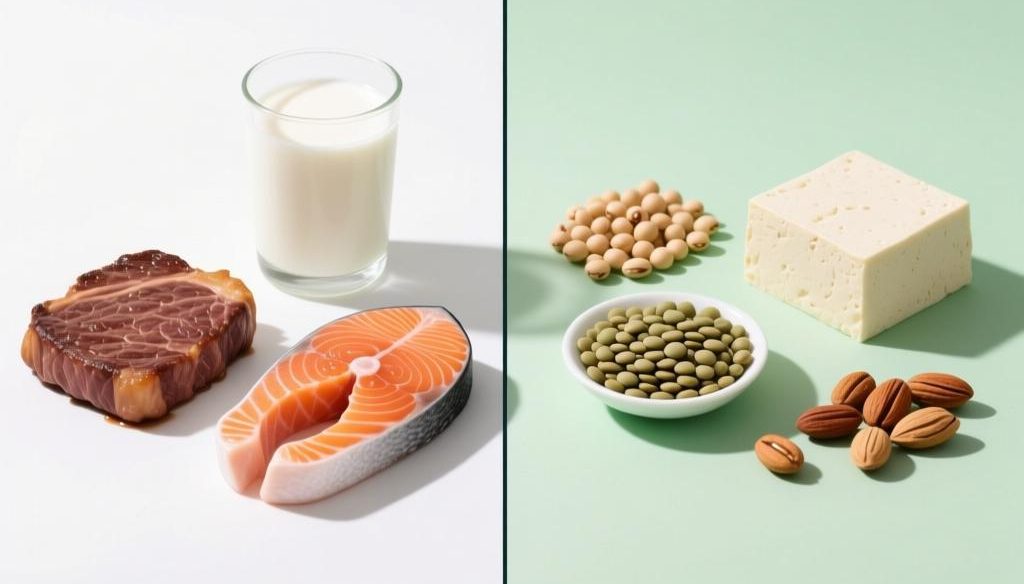
The Respective Benefits of Animal and Plant Proteins
The easiest way to settle this debate is to lay the facts out on the table — literally:
| What Matters | Animal Protein | Plant Protein |
|---|---|---|
| Amino acid profile | Complete, rich in leucine | Varies — soy and quinoa are complete |
| Fiber | None | Plenty in beans, lentils, and grains |
| Calories per serving | Often higher, depends on the cut | Usually lower per gram of protein |
| Standout nutrients | B12, heme iron, zinc, omega-3s | Fiber, potassium, antioxidants |
| Fullness factor | Fast and strong | Slower but longer lasting |
| Watch out for | Saturated fat and processed meats | Added oils and heavier processing |
There’s no knockout winner here — just trade-offs. Animal protein wins on amino acid completeness and convenience; plant protein wins on fullness, calorie control, and long-term health perks.
Which Do You Need More: Animal Protein or Plant Protein?
When comparing the two directly, the results are refreshingly honest: both work. Reviews of high-protein diets show similar fat loss whether the protein comes from animals or plants, as long as total protein and calories are matched. In plain English, how much protein you eat matters far more than where it comes from.
That said, patterns emerge over the long run. Eating patterns built around plants are consistently linked with lower body weight and smaller waistlines, most likely thanks to all that fiber and the lower calorie density.
Meanwhile, animal protein — especially dairy and eggs — holds a slight edge in studies on building and preserving muscle while dieting, thanks to its complete amino acid profile. Plenty of people find their sweet spot in the middle, blending mostly plants with some fish, eggs, or yogurt.
One more finding: protein helps you keep the weight off, too. Studies on weight maintenance show that higher protein intake makes holding your new weight easier, partly because preserved muscle keeps your calorie burn from sliding. Whether that protein comes from a salmon fillet or a tofu scramble matters less than eating enough of it, day after day.
How Each Type Keeps You Satisfied?
Let’s be real — weight loss lives and dies by appetite control. You can have the perfect meal plan on paper, but if you’re starving by 4 p.m., it’s game over.
Animal protein acts fast. It digests efficiently and triggers a strong, immediate fullness signal, which is why a piece of fish or a couple of eggs can shut down hunger on the spot. Plant protein works more like a slow burn.
The fiber and resistant starch in beans, lentils, and whole grains create a steadier, longer-lasting fullness that prevents the crash-and-snack cycle hours later.
Blood sugar stays flatter, cravings stay quieter, and you’re far less likely to graze through the afternoon. If between-meal munchies are your downfall, plant protein is your friend.
Your Budget, Lifestyle, and Values Count Too
Here’s a perspective most articles skip completely: the best protein for weight loss is the one you can actually afford, cook, and enjoy for the long haul.
Dried lentils and beans cost pennies per serving, while quality meat and fresh fish can strain a tight grocery budget. On a hectic weeknight, a can of black beans beats waiting for chicken to thaw — though a store-bought rotisserie chicken is nobody’s enemy either.
Then there’s the bigger picture: plant proteins generally come with a lighter environmental footprint, using less land, water, and energy. If sustainability matters to you, shifting your plate toward plants lets your weight-loss goals and your values pull in the same direction.
And enjoyment matters just as much — the best eating plan in the world is useless if you abandon it in three weeks, so build yours around proteins you actually look forward to eating.
How to Easily Consume More Protein?
You don’t need a food scale, a spreadsheet, or a diet coach — small, repeatable swaps are what add up:
- Upgrade your breakfast. Try Greek yogurt with berries, veggie-loaded scrambled eggs, or overnight oats stirred with peanut butter.
- Go meatless one night a week. A lentil curry, chickpea stew, or tofu stir-fry delivers protein and fiber in one bowl.
- Snack smarter. Hummus with veggies, edamame, roasted chickpeas, or a handful of almonds all beat the vending machine.
- Mix and match. Use half ground turkey and half lentils in tacos, chili, or pasta sauce — most people barely notice the difference.
- Keep backups on hand. Canned tuna, cottage cheese, frozen edamame, and protein powder rescue even the busiest days.
The goal isn’t perfection — it’s consistently hitting your protein target from foods you genuinely like. That’s what gets results that last.
Frequently Asked Questions
1. Can I lose weight eating only plant protein?
Absolutely. People lose weight on fully plant-based diets all the time, as long as total protein and calories stay in check. The secret is variety — rotating beans, lentils, tofu, tempeh, edamame, nuts, seeds, and whole grains covers all nine essential amino acids across the day, and soy and quinoa are complete on their own.
And since plant proteins come packaged with fiber and fewer calories, many people find weight loss actually feels easier this way.
2. How much protein do I need each day to lose weight?
Most research points to roughly 1.2 to 1.6 grams of protein per kilogram of body weight while cutting calories — that’s about 0.55 to 0.75 grams per pound. For a 155-pound (70 kg) person, it works out to around 85 to 110 grams a day.
An easy rule of thumb: aim for 25 to 30 grams at every meal, whether that’s a palm-sized piece of chicken, a cup of lentils, or a bowl of Greek yogurt, and spread it across the day.
3. Do I need protein powder, or is real food enough?
Real food is almost always enough — but powder is a handy bridge when life gets busy. Whey protein (from dairy) is fast-absorbing and rich in leucine, while pea and soy blends are solid plant-based options. Think of powders as a backup tool, not a requirement — if your meals already hit your protein target, you can happily save your money.
4. Will eating animal protein make me gain weight?
No single food makes you gain weight — consistently eating more calories than you burn does. Lean chicken, fish, eggs, and low-fat dairy fit comfortably into a weight-loss plan.
The trouble usually starts with fatty cuts, creamy sauces, fried preparations, and processed meats like bacon and sausage, which pile on calories without filling you up. Stick with leaner cuts, watch your portions, and mind your cooking methods.
5. Which is cheaper for weight loss: animal or plant protein?
Plant protein usually wins on price. Dried lentils and beans cost pennies per serving, and even canned beans beat most meats on price per gram of protein.
That said, eggs and canned tuna are budget-friendly animal options, and swapping chicken breasts for thighs saves real money. A practical approach: anchor your meals on inexpensive plant proteins, then add smaller amounts of animal protein for flavor and nutrients.
The Bottom Line
So, which one actually helps you lose weight? The honest answer is both. Animal protein brings complete amino acids and proven muscle support; plant protein brings fiber, lasting fullness, and lighter calories.
The people who lose weight — and keep it off — rarely pick a team. They simply eat enough protein, mostly from minimally processed foods they enjoy, and let the results speak for themselves. So go ahead: scramble those eggs, simmer those lentils, and make your next meal work a little harder for you.