A sudden or persistent dip in sexual desire is one of the most common concerns patients raise in sexual health clinics, and it affects people of every gender, age, and relationship status.
Low libido is rarely a single-cause problem; it is usually the result of an interaction between hormones, physical health, mental well-being, medications, and the quality of your intimate relationship. Understanding which of these forces is at play is the first step toward restoring a satisfying sex life.
What Low Libido Actually Means?
Libido is your baseline interest in sexual activity, and it naturally fluctuates across weeks, seasons, and life stages. Clinicians become concerned when the decrease is persistent, represents a clear change from your personal norm, and causes you distress or friction in your relationship.
In medical terms, this pattern is sometimes diagnosed as hypoactive sexual desire disorder (HSDD), but you do not need to meet a formal definition to deserve help — if it bothers you, it is worth discussing.
It is also important to note that desire discrepancies between partners are normal. One partner’s drive being higher or lower than the other’s does not automatically mean something is medically wrong with either person.
The concern arises when the lower desire feels alien to you, when it is accompanied by other symptoms such as fatigue or mood changes, or when it persists for six months or more.
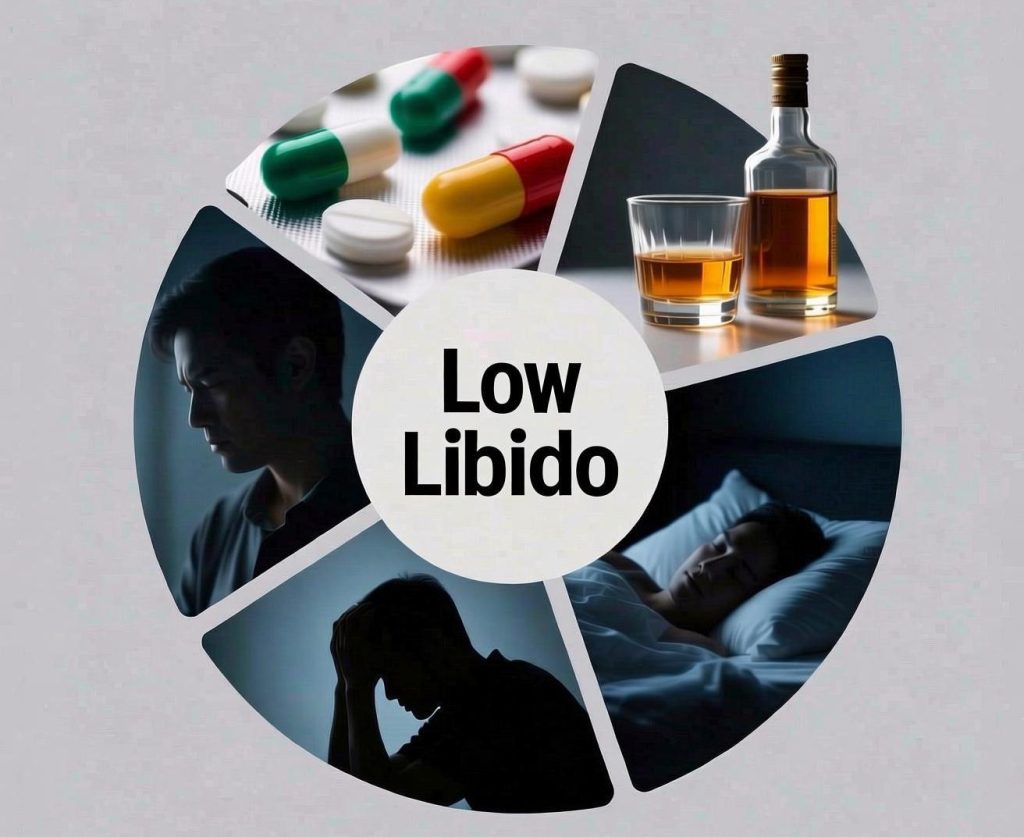
The 10 Most Common Reasons Behind a Low Libido
The causes below are drawn from clinical guidelines and peer-reviewed research, and they frequently overlap — many patients present with two or three contributing factors rather than just one.
| # | Cause | Category | Typical Clues |
|---|---|---|---|
| 1 | Hormonal imbalances (low testosterone, thyroid disorders) | Physical / Hormonal | Fatigue, weight change, mood shifts |
| 2 | Chronic stress and burnout | Psychological | Racing thoughts, poor sleep, irritability |
| 3 | Anxiety and depression | Psychological | Low mood, loss of pleasure in many activities |
| 4 | Medication side effects (SSRIs, blood pressure drugs, hormonal contraceptives) | Physical / Iatrogenic | Change coinciding with a new prescription |
| 5 | Chronic illness (diabetes, obesity, cardiovascular disease) | Physical | Reduced energy, vascular or nerve changes |
| 6 | Sleep deprivation and sleep disorders | Lifestyle | Snoring, daytime drowsiness, low energy |
| 7 | Alcohol, smoking, and recreational drug use | Lifestyle | Regular heavy use; evening reliance on substances |
| 8 | Relationship conflict and poor communication | Relational | Unresolved arguments, emotional distance |
| 9 | Body image and self-esteem concerns | Psychological | Avoidance of intimacy, negative self-talk |
| 10 | Life transitions (menopause, postpartum period, aging, grief) | Hormonal / Situational | Clear timing around a major life event |
1. Hormonal Imbalances
Testosterone is the primary driver of sexual desire in all genders, not just men. In men, levels decline gradually with age and can fall sharply due to obesity, type 2 diabetes, testicular injury, or chronic illness.
In women, testosterone and estrogen both influence desire, and drops are especially noticeable after surgical removal of the ovaries, during perimenopause, and after childbirth.
Thyroid dysfunction — both overactive and underactive — is another frequently overlooked hormonal culprit that reliably suppresses libido until treated.
2. Chronic Stress and Burnout
The stress hormone cortisol works directly against the hormonal cascade that produces desire. When your nervous system is stuck in “fight or flight,” the body deprioritizes reproduction.
Long working hours, financial pressure, caregiving duties, and information overload all chip away at mental bandwidth, leaving little room for erotic thought. Many patients describe it not as an absence of love for their partner but as an absence of mental “space” for sex.
3. Anxiety and Depression
Depression flattens the capacity to feel pleasure across the board — a phenomenon called anhedonia — and sexual desire is often one of the first casualties.
Anxiety interferes in a different way: worry about performance, body image, or relationship approval keeps the mind monitoring rather than enjoying. Both conditions are highly treatable, and addressing them often restores libido even before other symptoms fully resolve.
4. Medication Side Effects
Several widely prescribed drug classes are well documented to dampen desire. Selective serotonin reuptake inhibitors (SSRIs) used for depression and anxiety are the most notorious; certain blood pressure medications, antipsychotics, opioid painkillers, and some hormonal contraceptives can also contribute.
Never stop a prescribed medication on your own, but do raise the concern with your prescriber — dose adjustments or alternatives frequently solve the problem.
5. Chronic Health Conditions
Diabetes, high cholesterol, hypertension, and liver disorders all impair the vascular and neurological machinery of sexual response. Obesity adds a hormonal layer, because fat tissue converts testosterone into estrogen and is associated with lower circulating testosterone in men.
Pain conditions such as arthritis or fibromyalgia reduce desire indirectly by making physical closeness uncomfortable. Managing the underlying disease is usually the most effective path back to a healthy libido.
6. Poor Sleep
Sleep is when the body produces much of its testosterone and regulates cortisol. Research in young men has shown measurable testosterone drops after just one week of restricted sleep.
Obstructive sleep apnea is a particularly common, underdiagnosed cause — loud snoring plus daytime fatigue plus low libido is a classic triad that warrants a sleep study.
7. Alcohol, Tobacco, and Recreational Drugs
Alcohol in small amounts may lower inhibition, but chronic heavy use suppresses testosterone, damages nerves, and impairs arousal and orgasm in both sexes. Smoking accelerates vascular damage that restricts blood flow to the genitals.
Cannabis and other recreational drugs alter dopamine signaling and can flatten desire with regular use. The good news is that these are modifiable risk factors, and reduction often produces noticeable improvement within weeks.
8. Relationship Conflict and Emotional Distance
Desire is deeply relational for most people. Unresolved arguments, resentment over unequal labor, breaches of trust, or simply drifting into roommate-style cohabitation can extinguish erotic interest even when both partners are physically healthy.
Sex therapy research consistently shows that couples who address the emotional disconnect frequently see desire return without any medical intervention at all.
9. Body Image and Self-Esteem
Feeling unattractive — after weight change, surgery, a scar, or a course of aging — creates a self-conscious internal dialogue during intimacy that crowds out pleasure.
This affects all genders and often improves with a combination of individual counseling, gradual re-engagement with physical activity, and open reassurance from a partner.
10. Life Transitions and Natural Changes
Pregnancy and the postpartum period, perimenopause and menopause, bereavement, job loss, and the ordinary aging process all shift libido, sometimes dramatically. Menopause brings estrogen decline that can cause vaginal dryness and discomfort, which in turn reduces desire.
New parenthood combines hormonal shifts, sleep deprivation, and identity changes into a perfect storm. These causes are situational and often self-correcting, but support during the transition makes a substantial difference.
When Low Libido Signals an Underlying Health Problem
Occasionally, a drop in sex drive is the first visible sign of a medical condition that needs attention. A useful rule of thumb: if low libido arrives alongside fatigue, unexplained weight change, low mood, temperature intolerance, or erectile difficulties, ask your clinician for a basic workup.
Blood tests commonly checked include total and free testosterone, thyroid-stimulating hormone, prolactin, fasting glucose, and a lipid panel. Identifying a thyroid disorder, early diabetes, or clinically low testosterone early prevents more serious consequences later.
Practical Steps That Genuinely Help
Treatment depends on the cause, which is why an accurate picture matters more than any single “libido booster.” Evidence-based options include the following.
- Medical evaluation — a physical exam, medication review, and targeted blood work to rule out hormonal or metabolic causes.
- Medication adjustment — switching or re-dosing drugs known to affect desire, under your prescriber’s guidance.
- Hormone therapy — testosterone replacement for confirmed deficiency in men; short-term off-label testosterone or flibanserin for selected postmenopausal or premenopausal women with HSDD.
- Sex therapy and couples counseling — structured programs addressing desire discrepancies, communication, and intimacy habits.
- Lifestyle change — regular exercise, weight reduction, improved sleep hygiene, reduced alcohol, and smoking cessation.
- Addressing pain and discomfort — pelvic floor physical therapy, topical estrogen, or lubricants where dryness or pain is a barrier.
There is no magic pill that fixes every case of low libido, and over-the-counter supplements marketed for desire are poorly regulated and rarely supported by solid evidence. Sustainable improvement almost always comes from identifying and treating the specific causes in your situation.
What Is the Number One Cause of Low Libido?
There is no single universal cause, but if forced to rank them, chronic stress and psychological distress top most clinical lists for adults under 50, while hormonal decline and chronic disease dominate after 50.
For women specifically, medication side effects — especially SSRIs and hormonal contraceptives — and life transitions such as postpartum and menopause are disproportionately represented.
In practice, most patients present with a combination, which is why a thorough history matters more than a quick answer.
Can Low Libido Be Reversed?
In the majority of cases, yes. When the cause is a treatable condition — thyroid disease, sleep apnea, medication side effect, depression, or relationship conflict — libido frequently returns once the underlying issue is addressed.
Even when the cause is age-related hormonal decline, options such as hormone therapy, lifestyle change, and sex therapy meaningfully improve desire and satisfaction.
The outlook is best when both partners are involved in the process and when treatment begins before frustration hardens into avoidance.
Do Certain Foods or Supplements Boost Libido?
Internet claims about oysters, chocolate, ginseng, and maca root vastly outrun the evidence. Oysters are rich in zinc, which supports testosterone production, but eating them will not correct a clinically low hormone level.
What does help is an overall pattern: a Mediterranean-style diet supports vascular health and healthy weight, both of which protect sexual function.
Regular exercise — particularly resistance training — has a modest but measurable effect on testosterone and body image. Treat any supplement with skepticism, and check with a clinician before combining it with prescription medications.
Does Libido Always Decline With Age?
No. While testosterone in men and estrogen in women decline gradually over decades, desire does not follow a fixed schedule, and many adults maintain an active, satisfying sex life well into their seventies and beyond.
Health status, relationship quality, medication load, and beliefs about aging predict libido in later life far better than age alone.
Older adults with strong cardiovascular fitness, good sleep, and an emotionally connected partner frequently report desire levels comparable to much younger cohorts.
When Should I See a Doctor About Low Libido?
A reasonable threshold is when the change persists for six months or more, causes you distress, or arrives alongside other symptoms such as fatigue, low mood, sleep disturbance, or sexual pain.
Start with your primary care physician, a gynecologist, or a urologist — all are accustomed to these conversations, and many now screen for sexual health routinely.
If no physical cause is found, a referral to a certified sex therapist or couples counselor is the logical next step. The conversation can feel awkward to initiate, but it is a routine and highly workable clinical question for any trained provider.
Final Thought
Low libido is a signal, not a verdict. It usually reflects something identifiable — a hormone, a medication, a sleep deficit, an unresolved tension — and it responds to targeted, evidence-based care far more often than most people expect. Approaching it as a health question rather than a personal failing is the single most useful shift you can make.