Notice your pants feeling a little snug around the middle, even though you haven’t changed how you eat? You’re not imagining it. For many women, the years around menopause bring a frustrating shift: fat that once settled on hips and thighs quietly relocates to the belly. It’s so common that “menopause belly” has practically become a phrase of its own.
Here’s the encouraging part: what’s on your plate plays a bigger role than you might think. You don’t need a punishing diet or a complete kitchen overhaul. Often, it’s about easing up on a handful of everyday foods that quietly feed abdominal fat.
Below, we’ll walk through eight of the biggest offenders — including two sneaky ones disguised as health foods — why they matter at this stage of life, and what you can do about them without feeling deprived.
Why Belly Fat Becomes Harder to Fight After Menopause
Before we get to the food list, it helps to understand what’s actually happening inside your body. During the menopausal transition, estrogen levels decline steadily.
Estrogen does more than regulate your cycle — it also influences where your body prefers to store fat. When estrogen drops, fat storage shifts from the hips and thighs toward the abdomen, particularly the deeper visceral fat that wraps around your organs.
At the same time, a few other changes stack the deck against you:
- Muscle mass naturally declines with age, which slows your resting metabolism. You burn slightly fewer calories doing the exact same things you did at 35.
- Insulin sensitivity can decrease, meaning your body handles sugar and refined carbs less efficiently, making fat storage more likely.
- Sleep disruptions and hot flashes raise stress hormones like cortisol, which is closely linked to abdominal fat accumulation.
- Life gets busier or more sedentary, and activity levels often dip without you noticing.
Put these together, and it’s no wonder the scale — and the tape measure — creeps up. The good news? While you can’t stop hormonal changes, you can absolutely influence how strongly they express themselves. Diet is one of the most powerful levers you have.
The 8 Foods Worth Cutting Back On
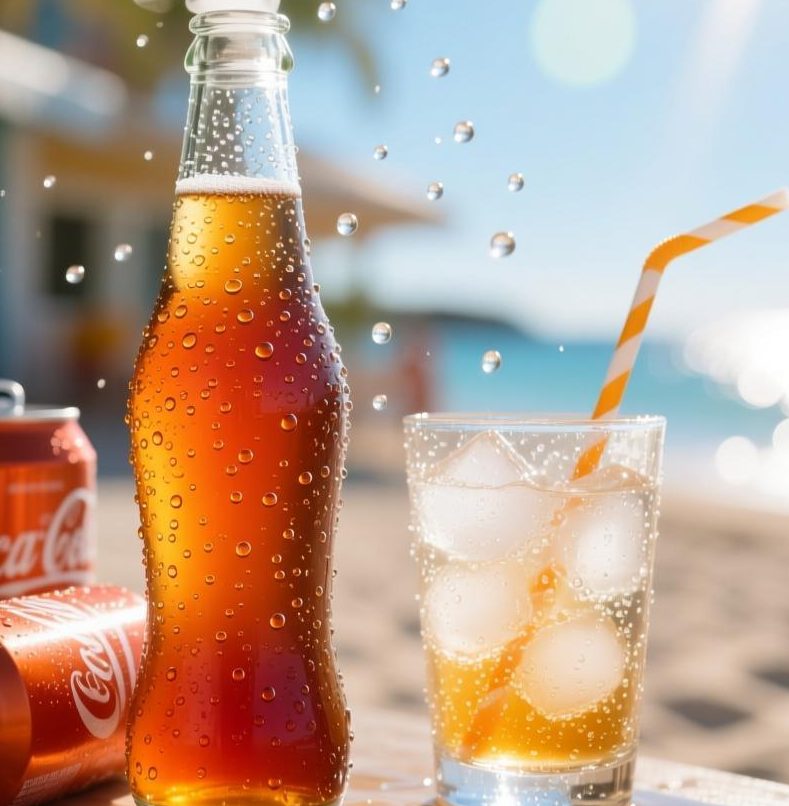
1. Sugary Drinks — Soda, Sweet Tea
Liquid sugar is arguably the fastest route to belly fat. Because beverages don’t trigger the same fullness signals as solid food, it’s remarkably easy to drink 150–300 calories without feeling any less hungry. Fructose-sweetened drinks in particular are strongly associated with visceral fat — the exact type that accumulates during menopause.
If your afternoon latte or evening soda is a cherished ritual, don’t panic. Start by downsizing, then experiment with sparkling water with a splash of citrus, unsweetened iced tea, or coffee with a touch of cream instead of flavored syrups. Most women find the craving fades within two weeks.
2. Fruit Juices and “Healthy” Smoothies
This one surprises people, so let’s be clear: juice — even fresh-pressed, even from the fanciest cold-press bar — is essentially liquid sugar wearing a halo.
An orange delivers fiber, water, and chewing resistance; a glass of orange juice delivers the sugar of three or four oranges with none of the fiber.
Store-bought smoothies are often worse, blending juice, sweetened yogurt, and fruit syrups into a 400-calorie sugar bomb that your body processes much like soda.
The menopause angle matters here: with insulin sensitivity already declining, repeated fruit-sugar hits encourage exactly the visceral fat storage you’re trying to avoid.
Enjoy whole fruit instead — the fiber slows sugar absorption and actually satisfies. If you blend at home, build around vegetables, protein, and healthy fat, with fruit as an accent rather than the base.
3. Refined Carbs — White Bread, Pastries
Refined grains have been stripped of their fiber and much of their nutrition, leaving behind a starch that digests almost like sugar. The result: rapid blood sugar spikes, a corresponding insulin surge, and a crash that leaves you raiding the pantry an hour later. For menopausal women whose insulin sensitivity is already declining, this cycle is a recipe for abdominal fat storage.
You don’t have to swear off bread forever. Swap white bread for genuine whole-grain versions, choose oats or Greek yogurt over pastries at breakfast, and reach for nuts, cheese, or fruit with nut butter when the 3 p.m. munchies hit. The fiber, protein, and healthy fat keep blood sugar — and cravings — on an even keel.

4. Alcohol
This is the one nobody wants to talk about. Alcohol is metabolized before other fuels, which means while it’s in your system, fat burning is essentially paused. Add the calories themselves, the lowered inhibitions around snacks, and alcohol’s well-documented disruption of deep sleep, and you have a perfect storm for middle-aged midsections.
Research consistently links heavy drinking to abdominal obesity, but even moderate nightly drinking can stall progress during menopause. Try framing it differently: instead of a nightly glass of wine as the default, make it an occasional pleasure.
Alcohol-free sparkling drinks, herbal tea rituals, or a mocktail with bitters and citrus can preserve the wind-down feeling without the metabolic cost.
5. Processed Meats — Bacon, Sausages
Hot dogs, salami, bacon, and packaged deli meats tend to be loaded with sodium, saturated fat, and preservatives — and they’re surprisingly calorie-dense for how little they satisfy.
High sodium intake promotes bloating and water retention, which can make belly fat look and feel worse than it is. Long-term studies have also linked high processed meat intake to greater weight gain over time.
For protein, lean toward what dietitians call “whole protein sources”: baked chicken or turkey, fish — especially fatty fish rich in omega-3s — eggs, legumes, and plain Greek yogurt. If you love a sandwich, roasting a chicken breast at home and slicing it beats anything from the plastic-wrapped aisle, both for your waistline and your blood pressure.
6. Fried Foods — French Fries, Fried Chicken
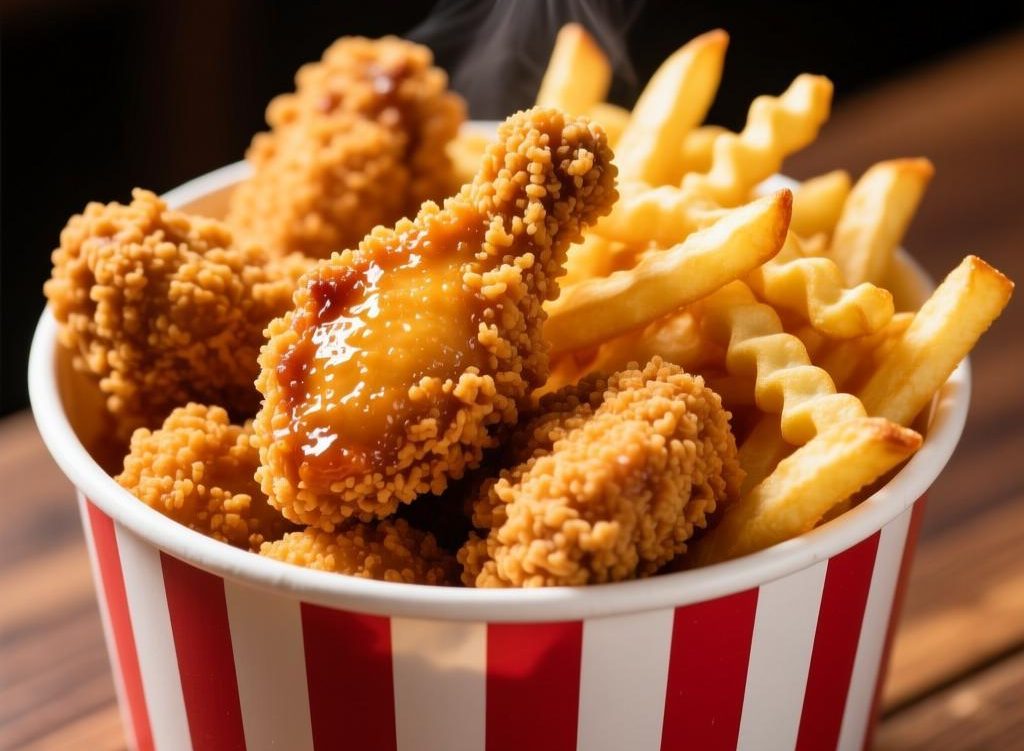
Fried foods combine the worst of both worlds: they’re typically coated in refined carbs and cooked in calorie-dense oils. A restaurant order of fries can easily carry 400–500 calories, most of it fat. Frequent fried food consumption is one of the strongest dietary predictors of weight gain in large cohort studies, and the belly is where much of it lands — especially after menopause.
Also worth noting: many fried foods are cooked in oils reused at high heat, generating compounds that promote inflammation. Since menopause already tends to nudge inflammatory markers upward, this is one habit worth rethinking. Air fryers, roasting, grilling, and baking deliver most of the crunch with a fraction of the calories.
7. Low-Fat and “Diet” Packaged Foods
Here’s the trap hiding in plain sight. When food manufacturers strip out fat, they usually replace it with sugar, refined starches, and salt to keep things tasting good.
Flavored fat-free yogurts can pack as much sugar as dessert; fat-free salad dressings are often little more than sweetened water; “diet” cookies and 100-calorie snack packs are refined carbs with clever marketing.
The low-fat label triggers what researchers call the “health halo,” leading people to eat up to 50% more of these foods than they would of the regular version.
Paradoxically, full-fat versions often serve you better during menopause: fat slows digestion, blunts blood sugar spikes, and genuinely satisfies hunger. Plain full-fat Greek yogurt with berries, real olive oil and vinegar on your salad, and a small square of dark chocolate instead of diet cookies — these choices work with your hormones, not against them.
8. Ultra-Processed Snack Foods — Chips, Cookies
The final category is sneakiest because it wears even more disguises. Chips, cookies, crackers, granola bars, and even some “healthy” protein bars are engineered to be hyper-palatable — carefully calibrated combinations of salt, sugar, fat, and crunch that your brain registers as far more rewarding than whole foods.
These products are designed so you can’t eat just one, and studies show people consume hundreds of extra calories a day on ultra-processed diets without realizing it.
Read labels with a simple rule of thumb: if the ingredient list reads like a chemistry experiment, treat it as an occasional treat, not a staple. Keep satisfying whole-food snacks visible and ready — a bowl of almonds, apple slices with peanut butter, hummus with veggies, or hard-boiled eggs — and the siren call of the chip bag grows noticeably quieter.
What to Limit and What to Enjoy Instead?
Sometimes seeing it all in one place makes change feel manageable. Here’s a simple reference table:
| Food to Limit | Why It Feeds Belly Fat | Easier Swap |
|---|---|---|
| Sugary drinks and sodas | Liquid sugar spikes insulin, adds calories without fullness | Sparkling water with lemon or berries |
| Fruit juices and smoothies | Fiber-free fruit sugar, processed like soda by the body | Whole fruit; veggie-based homemade blends |
| White bread and pastries | Refined carbs digest like sugar, drive cravings | 100% whole-grain bread, oats, fruit |
| Nightly alcohol | Pauses fat burning, disrupts sleep, lowers snack inhibitions | Alcohol-free spritzer or herbal tea ritual |
| Processed meats | High sodium and saturated fat, low satisfaction | Roasted chicken, fish, eggs, legumes |
| Fried foods | Calorie-dense, pro-inflammatory, carb-coated | Air-fried or roasted versions |
| Low-fat “diet” products | Hidden sugars, health-halo overeating, poor satiety | Plain full-fat yogurt, real olive oil dressing |
| Ultra-processed snacks | Engineered for overeating, low in fiber and protein | Nuts, Greek yogurt, fruit with nut butter |
Besides Food, What Other Factors Can Lead To Obesity?
Here’s where an honest, multi-angle view matters. Hormones, genetics, stress, and sleep all shape what happens around your middle. If you cut back on every food above but still sleep five hours a night and sit for ten, progress will be slow — and that’s not a willpower failure, it’s biology.
Think of diet as one pillar among a few:
- Strength training 2–3 times a week. Muscle is metabolic currency after 50. Even simple resistance bands or bodyweight squats at home help rebuild what time is quietly taking away.
- Prioritize sleep. Poor sleep raises cortisol and hunger hormones. If hot flashes wreck your nights, it’s worth discussing treatments with your doctor — better sleep often makes eating well feel dramatically easier.
- Manage stress deliberately. Chronic stress keeps cortisol elevated, and cortisol has a documented affinity for abdominal fat. Walking, yoga, breathwork, or simply protected downtime all count.
- Move more overall. Daily steps matter more than any single workout. A 20-minute walk after dinner aids blood sugar control, too.
The women who succeed at this stage aren’t the ones pursuing a perfect diet. They’re the ones who make a handful of boring, consistent choices — most days, most weeks, for years.
Small Changes That Actually Stick
Grand resolutions fail; small pivots stick. Instead of overhauling everything at once, try one swap per week from the table above. Research on habit formation consistently shows that changing one behavior at a time dramatically improves the odds it becomes permanent.
Also, aim for “less” rather than “never.” A rigid ban on wine or bread usually backfires within a month. An 80/20 approach — making these eight foods occasional guests rather than daily residents — delivers most of the benefit with none of the misery.
Finally, measure progress in centimeters and energy, not just kilograms. During menopause, body composition often improves even when the scale barely moves, especially if you’re strength training. How your clothes fit is a better report card than the bathroom scale.
When to Talk to Your Doctor
Belly fat after menopause is usually lifestyle-responsive, but not always. Check in with a healthcare professional if your abdominal size increases rapidly despite consistent habits, if you experience extreme fatigue or other unexplained symptoms, or if your waist measurement exceeds roughly 35 inches (88 cm) — a threshold associated with higher cardiometabolic risk.
Conditions like thyroid dysfunction, insulin resistance, and medication side effects can all masquerade as menopause belly, and they deserve proper evaluation. There’s also no shame in asking about hormone therapy or other medical options; the right choice is personal, and a good clinician will help you weigh it.
Frequently Asked Questions
1. How long does it take to lose menopause belly fat?
With consistent changes, most women notice their clothes fitting better within 6–12 weeks. Meaningful fat loss typically continues over 3–6 months. It’s slower than it was at 30 — but steady progress is absolutely achievable, and it tends to last longer when it comes gradually.
2. Do I need to cut out carbs completely?
No. Whole-food carbohydrates — oats, quinoa, beans, fruit, sweet potatoes — support energy, fiber intake, and even sleep quality. The issue is refined carbs stripped of fiber. Keep the wholesome carbs, moderate the processed ones, and your waistline will thank you.
3. Is fruit really okay if juice is on the “limit” list?
Yes — whole fruit and fruit juice behave very differently in your body. Whole fruit comes packaged with fiber, water, and chewing time, which slow sugar absorption and trigger fullness. Juice strips away all of that, leaving a rapid sugar hit. Two to three servings of whole fruit a day are firmly on the “enjoy” side of the ledger.
4. Are “menopause supplements” for belly fat worth buying?
Be skeptical. Most over-the-counter belly-fat pills lack solid evidence, and a few carry real risks. Your money is far better spent on quality food, a set of resistance bands, and maybe a session with a registered dietitian who can personalize your plan.
5. Can I still enjoy dessert or a drink occasionally?
Absolutely — and you should. A sustainable approach leaves room for birthday cake and holiday wine. The pattern matters far more than any single occasion. If these eight foods are occasional exceptions rather than daily habits, you’re on the right track.
The Takeaway
Menopause belly isn’t a character flaw or an inevitable sentence — it’s a hormonal shift that responds remarkably well to the right habits. Start by easing up on sugary drinks, fruit juices, refined carbs, alcohol, processed meats, fried foods, low-fat “diet” products, and ultra-processed snacks.
Pair those changes with strength training, decent sleep, and stress management, and give your body a few months to respond. Small, boring, consistent — that’s the formula that works after 50. Your future self, comfortably buttoning her favorite jeans, will be glad you started today.