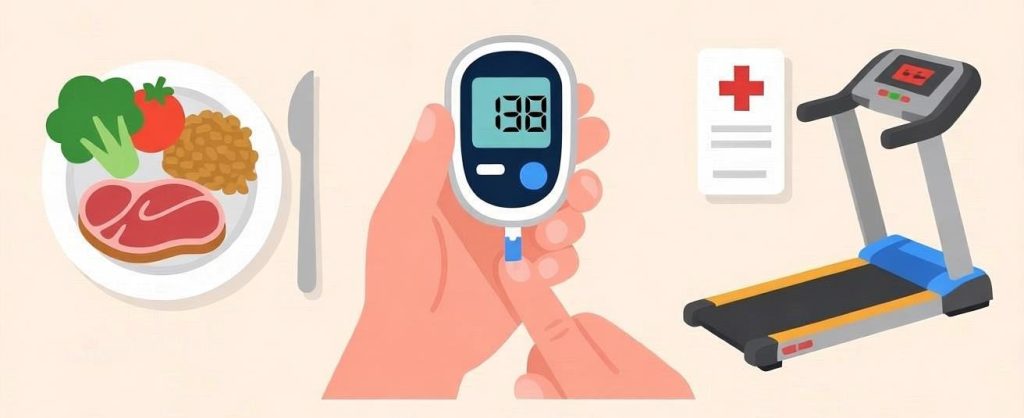
Most of us have heard that carrying extra weight “isn’t good for you,” but the phrase is so vague it barely sticks. It’s easy to ignore a warning that comes without details.
The reality is more interesting — and more hopeful — than a simple warning label: extra body fat isn’t just padding that sits quietly on your frame. It’s biologically active tissue that changes how nearly every system in your body works.
So let’s take a plain-language tour of what actually happens inside — through your heart, your blood sugar, your joints, your sleep, your liver, and even your mood — and why even small changes can matter far more than you’ve been told.
Your Heart and Blood Vessels Take the First Hit
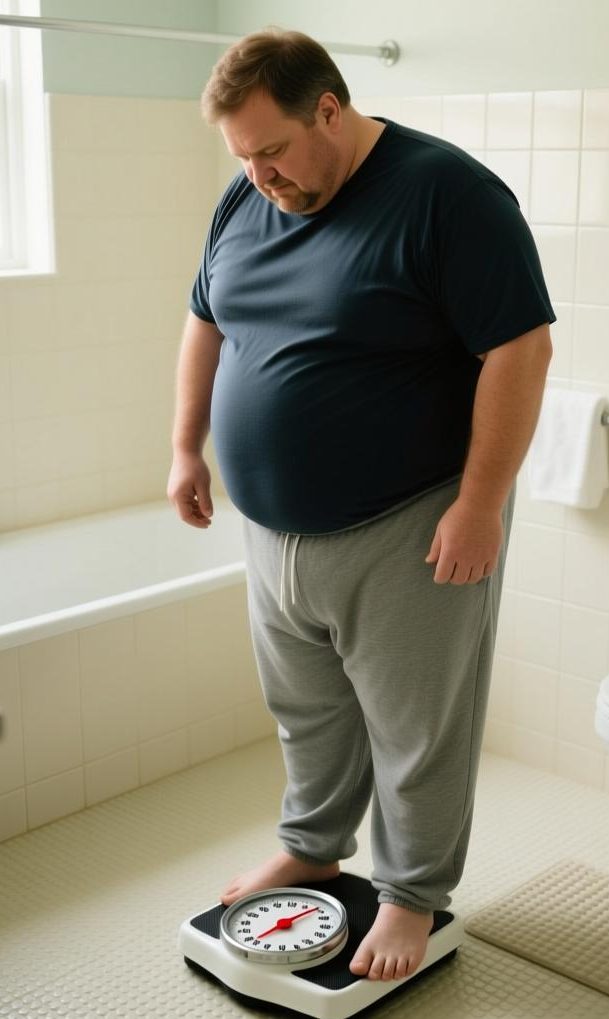
Picture your heart as a pump that was designed to serve a certain body size. When you carry extra weight, that pump has to push blood through more tissue and more blood vessels, and it gradually responds by raising your blood pressure.
Meanwhile, excess body fat changes your blood fats too: LDL (the “bad” cholesterol) and triglycerides tend to climb while HDL (the “good” cholesterol) drops. That combination encourages fatty plaque to build up along artery walls, narrowing them and making them stiffer, so every heartbeat becomes a little harder work.
Over the years, this extra workload is one reason carrying extra weight is so strongly linked to coronary artery disease, heart attacks, heart failure, stroke, and atrial fibrillation — an irregular heartbeat that further raises stroke risk. As weight creeps up, cardiovascular risk climbs right alongside it. Keep an eye out for the quiet warning signs:
- Blood pressure that creeps a little higher at every checkup
- Getting winded on stairs you used to climb easily
- LDL and triglycerides trending upward on your lab reports
The encouraging flip side is that your heart and blood vessels respond quickly when the pressure eases. Even a 5% weight loss can nudge blood pressure down, and many people see meaningful cholesterol improvements within a few months of healthier eating and regular movement. Your cardiovascular system forgives faster than you might expect.
How Extra Weight Disrupts Your Blood Sugar
Here’s something most people are never told: fat cells aren’t inert storage lockers, and the fat that matters most is the deep belly fat wrapped around your organs. That fat, called visceral fat, releases messenger molecules that interfere with insulin — the hormone responsible for moving sugar out of your bloodstream and into your cells, where it’s burned for energy.
When those signals build up, your cells stop responding to insulin properly. Doctors call this insulin resistance, and it’s the quiet first step on the road to type 2 diabetes.
At first, your pancreas tries to compensate by pumping out more insulin, sometimes for years. But the overworked system gradually falters, and blood sugar starts to creep up — prediabetes first, then full-blown type 2 diabetes. The link is strong: roughly 9 out of 10 people living with type 2 diabetes carry extra weight.
And because high blood sugar works silently, many people only discover it after damage has begun in the nerves, kidneys, eyes, and small blood vessels. If there’s one system worth protecting early, it’s this one, because early insulin resistance often reverses with modest weight loss and movement.
Your Joints and Back Carry the Load
For every pound of body weight, your knees absorb roughly four pounds of pressure with every step. That means 20 extra pounds translates to about 80 extra pounds of force each time you walk, climb stairs, or stand up from a chair.
Multiply that by thousands of steps a day, year after year, and it’s no surprise that extra weight is one of the strongest risk factors for osteoarthritis — the “wear and tear” kind of arthritis — especially in the knees, hips, and lower back.
But it isn’t only about mechanical stress. Body fat releases inflammatory chemicals that circulate through joint tissue and speed up the breakdown of cartilage, which helps explain why carrying extra weight is linked to joint pain even in areas that bear no weight, like the hands and wrists.
The lower back tells a similar story: a heavier midsection shifts your center of gravity forward, forces the muscles supporting your spine to work overtime, and gradually flattens the natural curve of your lower back.
The result is the stiffness and aching many people accept as “just getting older” — when weight is often the bigger culprit. And joint pain makes movement hurt, which makes weight harder to lose: another loop worth breaking early.
It Quietly Wrecks Your Sleep and Energy
If you wake up tired no matter how many hours you spent in bed, extra weight deserves a closer look. Fat deposits around the neck and throat can narrow your airway while you sleep, setting the stage for obstructive sleep apnea — repeated pauses in breathing that jolt your brain awake, sometimes 30 or more times an hour, without you remembering a thing. The result is fragmented, low-quality sleep, morning headaches, brain fog, and a surprising amount of daytime sleepiness.
Sleep apnea matters far beyond fatigue. Each nighttime drop in oxygen stresses the cardiovascular system and pushes blood pressure higher, which is one more channel from extra weight to heart trouble.
And there’s a cruel feedback loop: bad sleep disrupts the hormones that manage hunger. Ghrelin, the hormone that makes you hungry, goes up; leptin, the hormone that signals fullness, goes down.
So after a poor night’s sleep you genuinely crave more calorie-dense food, have less energy to move, and burn fewer calories through the day. Breaking the cycle — treating the sleep issue or losing a modest amount of weight — often improves both at once.
The Changes You Can’t See or Feel
Some of the most serious changes happen where you can’t see or feel them. Take your liver. When the amount of fat arriving from your diet and body stores outpaces what your liver can process, fat begins to accumulate inside the liver itself.
Fatty liver disease now affects roughly one in four adults worldwide, and while it often causes no symptoms at all, in some people it progresses to inflammation, scarring, and eventually liver failure. Many people only find out from routine blood work showing “slightly raised liver enzymes.”
Body fat also behaves like a hormone factory. In women, extra fat raises estrogen exposure, which helps explain why carrying extra weight after menopause is linked to breast and endometrial cancers. In men, it tends to lower testosterone, draining energy, muscle, and drive.
On top of that, fat tissue releases a steady drip of inflammatory signals — a slow, smoldering inflammation that quietly raises the risk of at least 13 cancers, along with dementia and faster biological aging. Here’s the whole picture at a glance:
| Body system | What extra weight does | Early signs people notice |
|---|---|---|
| Heart & blood vessels | Raises blood pressure and LDL, lowers HDL, stiffens arteries | Headaches, breathlessness on stairs, climbing readings |
| Blood sugar | Drives insulin resistance, prediabetes, and type 2 diabetes | Energy crashes, thirst, frequent urination |
| Joints & back | Multiplies pressure on knees, speeds cartilage wear | Stiff knees, aching lower back, avoiding stairs |
| Sleep | Narrows the airway, triggers sleep apnea | Loud snoring, waking unrefreshed, daytime fog |
| Liver | Builds up fat that can progress to inflammation and scarring | Usually none; raised liver enzymes on blood tests |
| Hormones & mood | Alters estrogen and testosterone, feeds low-grade inflammation | Irregular cycles, low energy, low mood |
What It Does to Your Mood, Confidence, and Brain

The physical effects are only half the story. Extra weight is consistently linked with higher rates of depression and anxiety, and the connection runs in both directions.
The same chronic inflammation and disrupted sleep that strain your body also affect brain chemistry, while daily friction — unkind comments, social stigma, a body that doesn’t feel like yours — takes a real psychological toll.
Many people describe a quiet retreat: avoiding photos, skipping events, sitting out activities they once loved. That shrinking of daily life can hurt quality of life as much as any lab result.
There’s also growing evidence that the vascular and inflammatory changes that burden the heart burden the brain too, with long-term links to memory decline and dementia risk.
The encouraging news is that this works in reverse: people who lose weight consistently report better mood, sharper focus, and renewed confidence, sometimes within months. Mental and physical health are not separate systems — they rise and fall together, and improving one almost always helps the other.
How Much Weight Do I Need to Lose to See Real Benefits?
Far less than most people assume — and this is one of the most underrated facts in weight science. Research consistently shows that losing just 5–10% of your starting weight is enough to lower blood pressure, improve blood sugar and cholesterol, reduce liver fat, ease pressure on your knees, and even improve sleep apnea.
If you weigh 200 pounds, that’s only 10–20 pounds. You don’t need to reach some “ideal” number on a chart before your body starts thanking you. A smaller loss you can actually maintain beats a dramatic loss that rebounds within a year, because regaining weight erases most of the benefits while chipping away at your motivation.
Is Belly Fat Really Worse Than Fat Elsewhere?
Yes — and the reason is worth understanding. The soft fat you can pinch just under your skin, called subcutaneous fat, is relatively metabolically calm. The deeper fat that wraps around your liver, intestines, and other organs, called visceral fat, is far more active.
It pumps out inflammatory chemicals and interferes with insulin more aggressively, which is why it’s specifically tied to heart disease, type 2 diabetes, and fatty liver. Two people can weigh exactly the same and have completely different risks depending on where their fat sits.
A quick home check is your waistline: risk climbs above roughly 40 inches (102 cm) for men and 35 inches (88 cm) for women, even if the scale looks reassuring.
Can You Carry Extra Weight and Still Be Healthy?
It’s genuinely possible — at least for a while. Some people with extra weight have normal blood pressure, normal blood sugar, normal cholesterol, exercise regularly, and feel fantastic.
Fitness matters enormously, and an active person carrying extra weight is often healthier than a thin person who never moves a muscle. But long-term studies suggest the “metabolically healthy” state often doesn’t hold steady.
Extra fat keeps sending inflammatory and hormonal signals year after year, so risks tend to creep upward with age, even when current test results look fine. The takeaway isn’t panic or shame — it’s that regular movement, decent sleep, and gradual weight management keep protecting you, whatever today’s numbers happen to say.
By now the pattern should be clear: carrying extra weight is not about appearance, and it’s not about one single disease. It’s a whole-body story — a network of pressures, hormones, and inflammation that touches your heart, blood sugar, joints, sleep, liver, and mind. But there’s an equally consistent pattern in the other direction.
Your body responds to change remarkably fast: blood pressure shifts within weeks, blood sugar and joint pain follow, and mood and energy tend to improve alongside. You don’t need a perfect body, a punishing diet, or an all-or-nothing plan.
Pick one small change you can actually sustain — a daily walk, better sleep, one improved meal — and let the benefits compound. Your body has been waiting to recover.