
As an endocrinologist with over 25 years of experience, I’ve seen firsthand the profound impact declining testosterone levels—often referred to as hypogonadism—can have on men’s physical, mental, and emotional well-being.
While age is a factor, the decline isn’t inevitable, and understanding the causes, recognizing the symptoms, and exploring appropriate treatment options is crucial for maintaining a high quality of life.
This article aims to provide a comprehensive overview, presented from multiple perspectives including medical, lifestyle, and psychological considerations, and is intended for informational purposes only and shouldn’t substitute for personalized medical advice.
Understanding Testosterone and Its Role
Testosterone, the primary male sex hormone, plays a vital role in numerous bodily functions, extending far beyond just reproduction.
It influences muscle mass and strength, bone density, red blood cell production, mood regulation, libido, cognitive function, and hair growth.
It’s produced primarily in the testes, with smaller amounts synthesized in the adrenal glands. The hypothalamus and pituitary gland, located in the brain, control testosterone production through a complex feedback loop.
Causes of Declining Testosterone: A Multifaceted Perspective
The decline in testosterone levels, or hypogonadism, is not always a simple case of aging. Several factors can contribute, and often it’s a combination of these that leads to lower levels.
- Age-Related Decline: As men age, testosterone levels naturally decrease, typically around 0.5-1% per year after the age of 30. This is a gradual process and is influenced by genetics and lifestyle.
- Medical Conditions: Certain medical conditions are strongly associated with lower testosterone levels.
- Obesity: Excess body fat, particularly abdominal fat, can increase aromatase activity, which converts testosterone to estrogen, effectively lowering testosterone.
- Type 2 Diabetes: Insulin resistance, common in type 2 diabetes, disrupts hormonal balance and often leads to lower testosterone.
- Metabolic Syndrome: This cluster of conditions, including high blood pressure, high blood sugar, unhealthy cholesterol levels, and abdominal fat, frequently accompanies low testosterone.
- Chronic Kidney Disease: Impaired kidney function can affect hormone metabolism.
- Liver Disease: The liver plays a critical role in hormone regulation; disease can disrupt this process.
- HIV/AIDS: This condition and its treatments can negatively impact testosterone production.
- Cancer and Cancer Treatments: Certain cancers and their treatments, particularly chemotherapy and radiation, can suppress testosterone production.
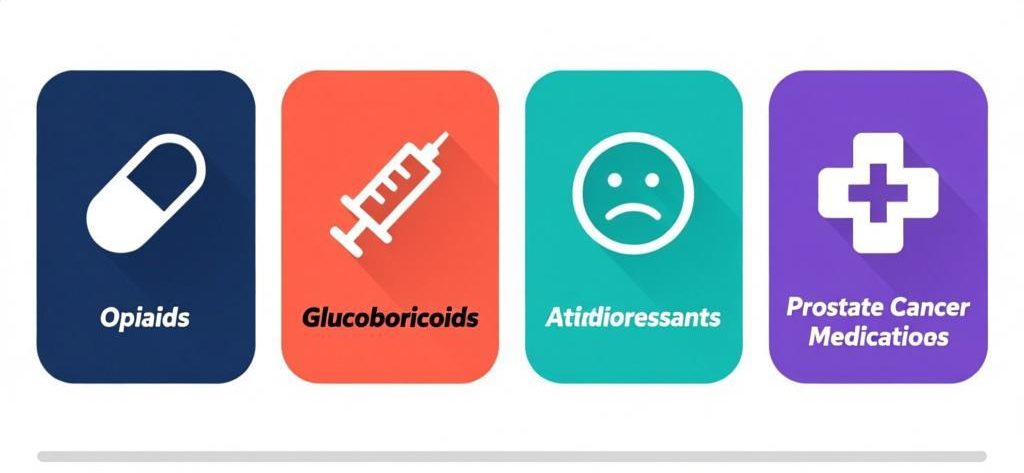
- Medications: Various medications can lower testosterone as a side effect.
- Opioids: Pain medications like morphine and codeine can significantly suppress testosterone production.
- Glucocorticoids: Steroids like prednisone, often used to treat inflammatory conditions, can interfere with testosterone synthesis.
- Antidepressants: Certain selective serotonin reuptake inhibitors (SSRIs) can impact hormone levels.
- Prostate Cancer Medications: Drugs like GnRH agonists and antagonists used to treat prostate cancer dramatically reduce testosterone.
- Lifestyle Factors: Choices we make daily can significantly impact testosterone levels.
- Poor Diet: A diet lacking in essential nutrients can impair hormone production.
- Lack of Exercise: Sedentary lifestyles contribute to decreased testosterone and increased body fat.
- Chronic Stress: Prolonged stress elevates cortisol levels, which can suppress testosterone.
- Sleep Deprivation: Insufficient sleep disrupts hormonal balance.
- Excessive Alcohol Consumption: Heavy drinking can negatively affect testosterone synthesis.
- Genetic Factors: A family history of hypogonadism or related conditions may increase the risk.
- Testicular Problems: Conditions affecting the testes directly, such as undescended testicles (cryptorchidism), testicular injury, or testicular cancer can impair testosterone production.
Symptoms of Low Testosterone: A Patient’s Perspective
Symptoms of low testosterone can vary greatly from man to man. Some men experience subtle changes, while others have more pronounced effects. It’s crucial to note that many symptoms are non-specific and can be attributed to other conditions, making diagnosis challenging.
- Sexual Dysfunction: Decreased libido (sex drive), erectile dysfunction, and reduced sperm production are common.
- Fatigue & Lack of Energy: Persistent tiredness and a general feeling of weakness.
- Muscle Loss & Weakness: Reduced muscle mass and strength, even with regular exercise.
- Bone Loss: Decreased bone density, increasing the risk of fractures.
- Mood Changes: Depression, anxiety, irritability, and difficulty concentrating.
- Cognitive Impairment: Memory problems and difficulty focusing.
- Physical Changes: Loss of body hair, decreased beard growth, and gynecomastia (development of breast tissue).
- Anemia: Low red blood cell count.
Diagnosis: A Comprehensive Medical Assessment
Diagnosing low testosterone requires a thorough medical evaluation. This includes a detailed medical history, physical examination, and laboratory testing.
- Medical History: The doctor will inquire about medications, medical conditions, lifestyle factors, and family history.
- Physical Examination: This involves assessing physical characteristics, including body composition, hair distribution, and signs of hormonal imbalances.
- Blood Tests: Measuring testosterone levels is essential. It’s typically done with a fasting blood draw in the morning, when testosterone levels are highest. Free testosterone levels (the bioavailable form) may also be measured. Additional tests, such as LH (luteinizing hormone), FSH (follicle-stimulating hormone), and prolactin, help to determine the underlying cause of low testosterone.
- Specialized Testing: In some cases, further testing, such as stimulation tests or genetic testing, may be necessary.
Treatment Options: A Personalized Approach
Treatment for low testosterone is individualized based on the underlying cause, severity of symptoms, and patient preferences. It’s crucial to rule out any underlying medical conditions before initiating testosterone replacement therapy (TRT).
- Lifestyle Modifications: Often the first line of treatment.
- Weight Management: Losing excess weight can significantly improve testosterone levels.
- Regular Exercise: Resistance training and cardiovascular exercise are beneficial.
- Stress Reduction: Techniques like meditation, yoga, and deep breathing can lower cortisol levels.
- Adequate Sleep: Aim for 7-9 hours of quality sleep per night.
- Healthy Diet: Focus on nutrient-rich foods, including lean protein, healthy fats, and complex carbohydrates.
- Medication Adjustments: If medications are contributing to low testosterone, your doctor may consider alternative options.
- Testosterone Replacement Therapy (TRT): This involves supplementing testosterone to restore levels. Various forms are available.
- Injections: Offer consistent hormone levels but require regular injections.
- Topical Gels & Patches: Easy to use but can have skin irritation and potential transfer to others.
- Oral Medications: Less common due to potential liver toxicity.
- Buccal Tablets: Absorbed through the gums.
- Pellets: Implanted under the skin and provide sustained release.
- Addressing Underlying Medical Conditions: Effectively managing conditions like diabetes and obesity can indirectly improve testosterone levels.
Psychological Considerations: The Emotional Impact
Declining testosterone can significantly impact a man’s mental and emotional well-being. The symptoms—fatigue, mood changes, and sexual dysfunction—can lead to feelings of depression, anxiety, and decreased self-esteem. Addressing these psychological concerns through counseling, support groups, or medication (if necessary) is an integral part of comprehensive care.
The Future of Testosterone Management
Research continues to explore new and improved ways to diagnose and treat low testosterone. These include novel drug targets, personalized treatment approaches, and a better understanding of the complex interplay between testosterone, lifestyle, and overall health.
Frequently Asked Questions (FAQs)
Q: Is declining testosterone a normal part of aging?
A: While testosterone levels naturally decline with age, it’s not an inevitable process. Lifestyle factors and underlying medical conditions can significantly influence the rate of decline.
Q: What are the risks of testosterone replacement therapy?
A: TRT carries potential risks, including increased red blood cell count, sleep apnea, prostate enlargement, and male pattern baldness. Close monitoring is essential.
Q: How long does it take to see results from treatment?
A: The timeframe for seeing results varies depending on the treatment method and individual response. Some improvements may be noticeable within weeks, while others may take several months.
Q: Can I reverse declining testosterone levels?
A: In many cases, lifestyle modifications and addressing underlying medical conditions can help improve testosterone levels. TRT is a longer-term management strategy.