Walk into any supplement store or scroll through men’s health websites, and you’ll see DHEA bottles promising to turn back the clock — more energy, more muscle, better moods, and a stronger sex drive.
As a urologist who has spent years talking with men about testosterone and sexual function, I hear the same question almost every week: “Should I be taking DHEA?” The honest answer is: it depends, and the hype is far bigger than the science. Let’s break it down together in plain English.
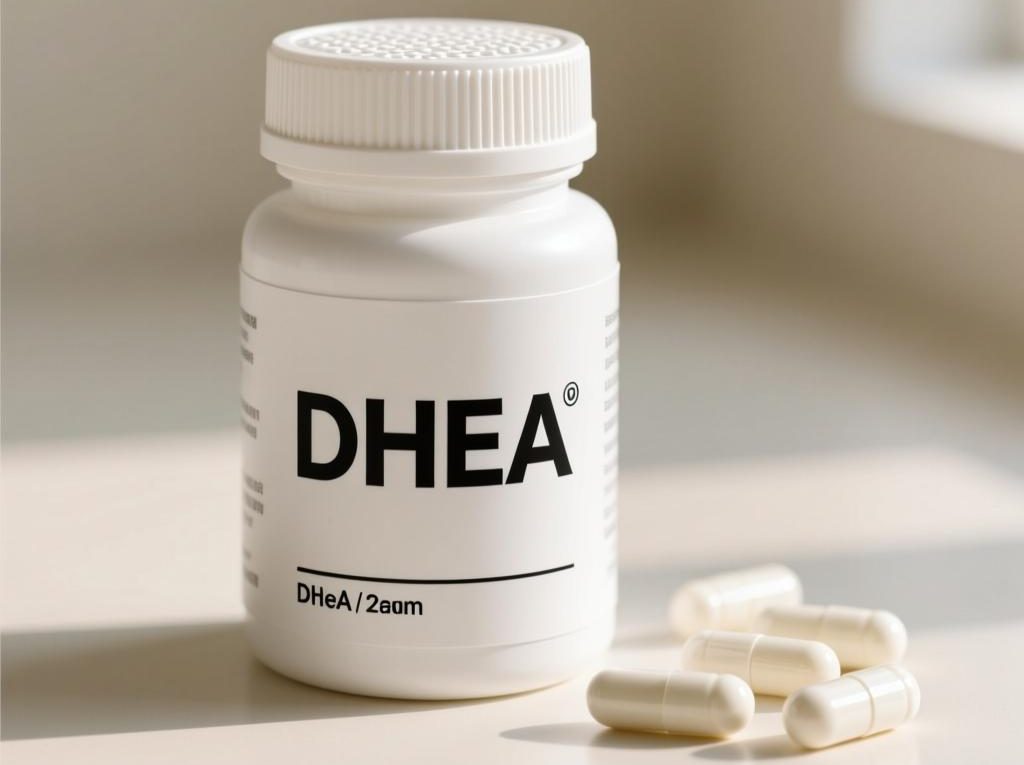
What Exactly Is DHEA, Anyway?
DHEA stands for dehydroepiandrosterone — I know, a mouthful. It’s a hormone your adrenal glands (the little stress-factories sitting on top of your kidneys) naturally produce. Your body uses DHEA as a raw material to build other hormones, including testosterone and estrogen. Think of it as flour: your body can bake different “bread” from it depending on what it needs.
Here’s the catch. DHEA production peaks in your mid-20s and then slowly declines year after year. By the time you hit 70, your DHEA levels may be only 10–20% of what they were in your youth. That decline is exactly what supplement companies point to when they market DHEA as an anti-aging, vitality-boosting pill.
The logic sounds convincing — “your levels dropped, so top them back up” — but human biology is rarely that simple. If you’re curious about the deeper research, this review of DHEA for men’s sexual wellness digs into the studies in detail.
How Your Body Turns DHEA Into Testosterone
Understanding the conversion process helps explain why results vary so much from man to man. When you swallow a DHEA capsule, your body doesn’t automatically convert it into testosterone.
Instead, enzymes in your fat tissue, liver, testicles, and brain decide what DHEA becomes — and here’s the surprising part: in men, a meaningful chunk of supplemental DHEA can convert into estrogen, not testosterone.
- In young men (under 40): your testicles are already producing plenty of testosterone, so extra DHEA mostly gets converted to estrogen or simply flushed out.
- In middle-aged and older men: natural DHEA and testosterone production have both declined, so there’s more “room” for DHEA to shift toward testosterone — but only modestly.
- In women: DHEA tends to raise testosterone more reliably, which is why some studies show stronger effects in female participants.
So the idea that popping DHEA is like filling up a low testosterone tank is misleading. It’s more like adding extra ingredients to a kitchen where the chef (your endocrine system) decides what dish to actually cook — and sometimes the chef makes a dish you didn’t order.
What the Research Actually Says
Let’s look at the evidence honestly, because this is where marketing and medicine part ways. Multiple randomized controlled trials have tested DHEA in older men, and the results are underwhelming when it comes to actually raising testosterone.
| Study Group | Typical Testosterone Change | What It Means for You |
|---|---|---|
| Healthy men under 40 | Little to no increase | Your body already regulates itself; extra DHEA gets flushed or converted to estrogen |
| Healthy men 50+ | Small, variable increases | Some men see a mild bump, most see nothing clinically meaningful |
| Men with diagnosed low testosterone | Inconsistent results | Not a reliable replacement for prescribed testosterone therapy |
| Men with adrenal insufficiency | More promising results | The one group where DHEA clearly helps, because their adrenal glands underproduce it |
In my clinic, I always tell patients this: DHEA might nudge your numbers slightly, but it almost never moves the needle the way genuine declining testosterone treatment options can. If a supplement ad promises “300% more testosterone,” your skepticism should be working overtime.

Who Might Actually Benefit from DHEA?
After saying all that, I don’t want to leave you thinking DHEA is useless for everyone. There are a few groups where the evidence and clinical experience lean in its favor:
- Men over 50 with mildly low “vitality” complaints — fatigue, mood dips, reduced libido — but whose blood tests aren’t bad enough to justify prescription therapy. Some of these men report feeling subjectively better on DHEA.
- Men with adrenal insufficiency, a genuine medical condition where the adrenal glands don’t produce enough hormones. Here, DHEA replacement has documented benefits for mood and quality of life.
- Men exploring a middle path before committing to testosterone replacement therapy (TRT), ideally with hormone monitoring under a doctor’s supervision.
What DHEA is not good for: building serious muscle, curing erectile dysfunction, or reversing decades of low energy overnight. If your main concern is bedroom performance, understanding testosterone boosters vs male enhancement products will save you a lot of wasted money, because they solve different problems.
The Side of DHEA Nobody Talks About
Because DHEA is sold as an over-the-counter supplement, many men assume it’s automatically safe. But remember — DHEA is a hormone precursor, not a vitamin. It interacts with your endocrine system, and that comes with real risks:
- Estrogen conversion: bloating, breast tenderness, and mood swings in some men, especially at higher doses.
- Oily skin and acne, particularly in younger men.
- Hair loss in men genetically prone to male-pattern baldness.
- Prostate concerns: if you have an enlarged prostate, elevated PSA, or a family history of prostate cancer, talk to your urologist first — always.
- Heart strain: some studies have linked DHEA to slightly reduced HDL (“good”) cholesterol.
- Interference with testing: DHEA can skew hormone blood tests and complicate diagnosis.
Also, one thing I see far too often in practice: men self-treating fatigue with supplements when the real cause is something else entirely. Persistent exhaustion can be an early warning sign of thyroid issues, sleep apnea, depression, or heart problems. If you’re always drained, read up on when fatigue signals a men’s health issue before assuming hormones are to blame.
How to Take DHEA Safely
If, after weighing the evidence, you and your doctor decide DHEA is worth trying, here’s the sensible way to do it:
- Test first. Get a baseline blood panel: total and free testosterone, estradiol, DHEA-S, LH, and PSA.
- Start low. Most studies use 25–50 mg per day. More is not better — higher doses mainly increase side effects.
- Take it in the morning, mimicking your body’s natural hormone rhythm.
- Give it 8–12 weeks, then retest. If nothing has changed subjectively or objectively, stop.
- Avoid it entirely if you have prostate cancer, breast cancer, or unexplained hormone-sensitive conditions.
And please, buy from reputable brands that undergo third-party testing. The supplement industry is loosely regulated, and independent lab analyses have found everything from underdosed pills to contaminated batches on store shelves.
Natural Ways That Outperform DHEA
The lifestyle fundamentals move your testosterone and vitality more than any pill on the shelf. If you truly want a natural testosterone boost, start with these proven levers:
- Lift heavy things. Resistance training, especially compound movements like squats and deadlifts, directly signals your testicles to produce more testosterone. Even moderate exercises to improve performance make a measurable difference.
- Sleep 7–9 hours. Most of your daily testosterone is produced during deep sleep. Cutting sleep to 5 hours can drop levels by 10–15% in a single week.
- Lose the belly fat. Fat tissue converts testosterone into estrogen. Losing excess weight is like a double win — more T, less conversion.
- Watch the alcohol. Heavy drinking suppresses testosterone for 24–48 hours afterward. Learn more about what alcohol really does before your next night out.
- Manage stress. Chronic cortisol production actively blocks testosterone synthesis.
Your diet matters too. Zinc, vitamin D, healthy fats, and adequate protein all support hormone production — these foods for hormone health should form the base of your plate before any supplement earns a spot. And for men over 50 comparing all the options on the market, this guide to testosterone boosters for men over 50 covers what’s actually worth considering at that stage of life.
FAQs
Q: How long does DHEA take to work?
A: If it’s going to do anything, most men notice subtle changes in energy or mood within 4–8 weeks. If you feel nothing after 12 weeks, it’s probably not for you.
Q: Can DHEA help erectile dysfunction?
A: Rarely on its own. Most ED stems from blood flow, nerve function, or psychological factors rather than DHEA levels. If intimacy is your main concern, options that boost libido and sexual desire target the problem more directly.
Q: Will DHEA show up on a drug test?
A: DHEA itself is banned by most professional sports organizations, and it can elevate levels of other androgens. Competitive athletes should avoid it.
Q: Can I take DHEA with TRT?
A: There’s usually no reason to — TRT already suppresses your natural hormone axis, and stacking DHEA on top adds risk without benefit.
Q: Does DHEA help with aging and sex life?
A: For most men, the effect is modest at best. A healthier approach to sexuality and aging focuses on cardiovascular fitness, communication, and treating specific problems rather than chasing one hormone.
The Bottom Line
So, can DHEA really boost your testosterone? The honest answer: a little, sometimes, in some men — and usually not enough to justify the hype. For men under 40, it’s close to useless. For men over 50 with mild complaints, it may offer a gentle nudge worth discussing with a doctor. For anyone with truly low testosterone, DHEA is not a substitute for proper diagnosis and treatment.
My advice after years in the urology clinic: get your blood tested before spending a dollar on supplements. Fix your sleep, your diet, your training, and your stress first — those fundamentals will outperform any bottle on the shelf. And if your fatigue, low libido, or bedroom troubles persist, see a urologist rather than self-treating. Your hormones deserve a real diagnosis, not a guess.