
That Aching Back Is More Common Than You Think
If you’re reading this while shifting in your chair trying to find a position that doesn’t hurt, you’re in good company. Chronic lower back pain is one of the most common reasons people miss work, skip activities they love, and lie awake at night frustrated.
Studies suggest that up to 80% of adults will experience back pain at some point, and for millions, it becomes a daily companion that just won’t leave.
The frustrating part? Many people cycle through treatment after treatment—painkillers, physical therapy, injections, even surgery—without lasting relief. That’s exactly why so many are now asking a question that would have raised eyebrows a decade ago: could cannabis actually help?
With more states and countries legalizing medical cannabis, and with research finally catching up to public curiosity, it’s worth taking an honest, balanced look at what the science really says. Let’s dig in.
Why Your Lower Back Hurts in the First Place
Before we talk about cannabis, it helps to understand what’s going on in your back. Chronic lower back pain—generally defined as pain lasting more than 12 weeks—can come from a whole range of sources:
- Muscle or ligament strain from lifting, twisting, or poor posture over time
- Herniated or bulging discs pressing on nearby nerves
- Arthritis in the spine’s joints, including osteoarthritis
- Sciatica, where the sciatic nerve gets irritated and sends shooting pain down your leg
- Spinal stenosis, a narrowing of the spinal canal
- Past injuries that never fully healed
- Stress and tension, which can cause muscles to stay tight and painful
Here’s an important truth that surprises many patients: in many cases of chronic back pain, doctors can’t pinpoint a single clear cause. Pain becomes “chronic” partly because the nervous system itself becomes sensitized—like a volume knob stuck on high. This is where things get interesting for cannabis, because of how it interacts with that very system.
How Cannabis Works With Your Body’s Pain System
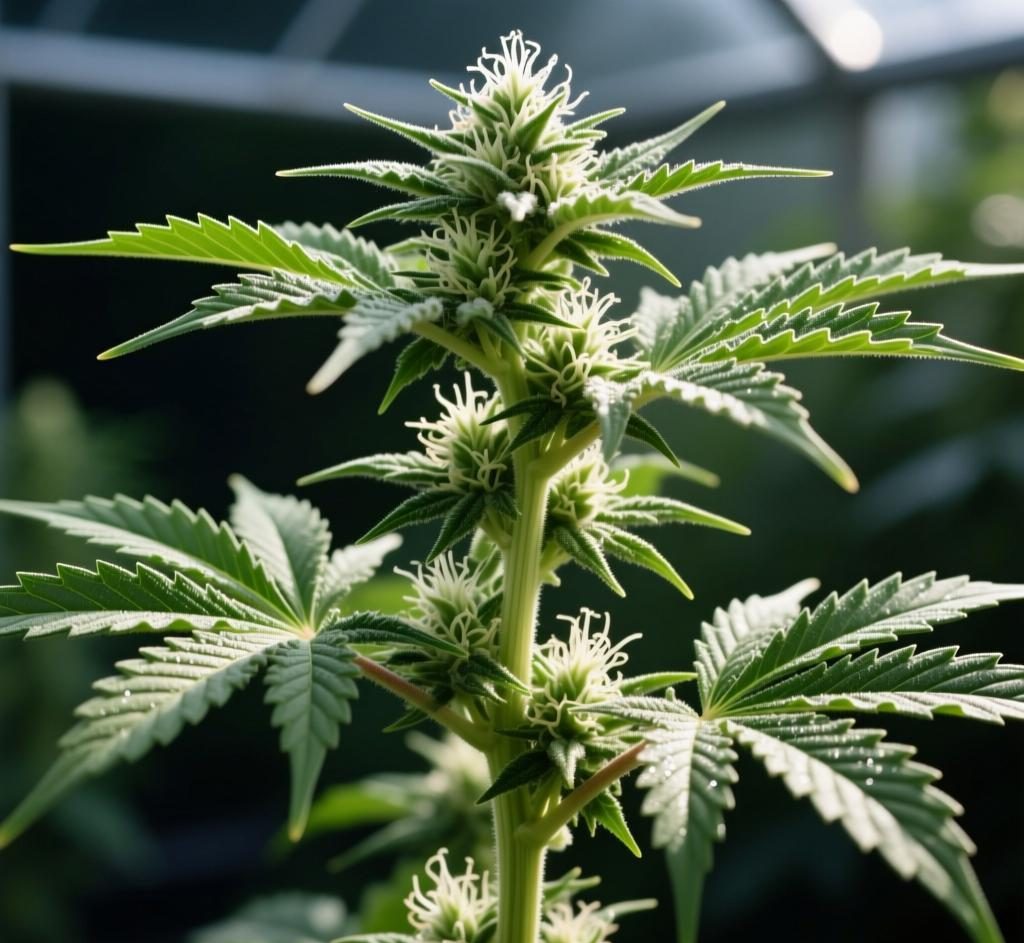
Your body has a built-in network called the endocannabinoid system (ECS). Think of it as your internal balancing crew—it helps regulate pain perception, inflammation, sleep, mood, and appetite. The cannabis plant contains over a hundred compounds called cannabinoids, and the two you’ll hear about most are:
- THC (tetrahydrocannabinol) – the compound responsible for the “high,” but also involved in pain relief and relaxation
- CBD (cannabidiol) – non-intoxicating, and studied for its anti-inflammatory and calming effects
These compounds interact with receptors in your brain, spinal cord, and immune system. In simple terms, they may help turn down the “volume” on pain signals and calm inflammation around irritated nerves and joints. For people whose pain has outlived its original cause, this mechanism is exactly what makes cannabis worth investigating.
What the Research Actually Says
Let’s be honest about the state of the science: cannabis research has historically been limited by legal restrictions, so we’re working with an evolving picture. Here’s a fair summary of what studies have found so far:
| What Research Suggests | What to Keep in Mind |
|---|---|
| Many patients report meaningful pain relief and better sleep with medical cannabis | Most studies rely on self-reported pain, which can be subjective |
| Cannabis may help with nerve-related pain (neuropathic pain), a common feature of chronic back problems | Results vary widely between individuals and products |
| Some trials show cannabis can reduce reliance on opioids for chronic pain | It’s not a guaranteed replacement—opioid tapering should always be doctor-guided |
| CBD may reduce inflammation in early lab and animal studies | Human research on CBD alone for back pain is still catching up |
Major health organizations, including reviews published by the National Academies of Sciences, have concluded there is substantial evidence that cannabis is effective for chronic pain in adults—though researchers also emphasize the need for more long-term studies. In short: promising, but not a miracle cure.
Real-Life Benefits People With Back Pain Report
Beyond the lab data, here’s what patients consistently mention when they use cannabis for chronic lower back pain:
- Better sleep – Pain and insomnia feed each other; many find cannabis helps break that cycle
- Reduced muscle tension – Tight, guarded muscles around a sore back often relax
- Improved mood – Living with constant pain wears you down emotionally, and cannabis may ease that burden
- Less dependence on pills – Some people reduce their use of NSAIDs or stronger medications (always with medical guidance)
- More movement – When pain eases even slightly, walking and gentle exercise become possible again
That last point matters more than it might seem. Movement is one of the best-known treatments for chronic back pain, and anything that helps you stay active can create a positive snowball effect on recovery.
Different Ways to Use Cannabis for Back Pain
If you and your doctor decide to give it a try, you’ll quickly learn there are many delivery methods—not just smoking. Each has different speeds of relief and durations:
| Method | How Fast It Works | How Long It Lasts | Best For |
|---|---|---|---|
| Oils and tinctures (under the tongue) | 15–45 minutes | 4–6 hours | Steady, all-day relief |
| Edibles (gummies, capsules) | 30–90 minutes | 6–8 hours | Long-lasting relief, nighttime use |
| Vaporizing | Minutes | 2–4 hours | Quick flare-up relief |
| Topical creams and balms | Minutes to an hour | Localized, a few hours | Targeted muscle soreness (no high) |
Topicals deserve special mention for back pain sufferers: applied directly to the skin, they deliver localized relief without any psychoactive effects, making them a low-risk starting point for people who are cannabis-curious but cautious.
Important Risks and Things to Consider First
An honest conversation about cannabis has to include the cautions. It’s a real medicine with real effects, and it isn’t right for everyone:
- Possible side effects include dizziness, dry mouth, drowsiness, and short-term memory issues—especially with THC
- Drug interactions – Cannabis can interact with blood thinners, sedatives, and other medications, so tell your doctor everything you take
- Mental health considerations – People with a history of anxiety, psychosis, or substance use disorder should be especially careful
- Tolerance and dependence – Long-term daily use can lead to dependence in some people
- Legal status – Laws vary dramatically by country and state; check your local regulations before obtaining anything
- Quality control – Buy only from licensed dispensaries or reputable brands that publish third-party lab results
And to be clear: cannabis should never be the only tool in your toolkit. Physical therapy, core strengthening, weight management, good sleep habits, and stress reduction remain the foundation of long-term back health.
How to Get Started Safely
If you’re seriously considering cannabis for your back pain, here’s a sensible roadmap:
- Talk to your doctor first – Ideally one experienced in medical cannabis, who can review your history and medications
- Start low, go slow – Begin with a very low dose (especially of THC) and adjust gradually over days or weeks
- Consider CBD-dominant products first – Many people get relief without any intoxication
- Keep a pain journal – Track your doses, pain levels, and sleep so you can spot what actually works
- Don’t drive or operate machinery until you know how it affects you
- Give it time – Finding the right product, dose, and timing often takes weeks of experimentation
Patience is genuinely part of the process. There’s no one-size-fits-all dose for chronic pain, and what works wonders for a friend may do nothing for you.
FAQs About Cannabis and Chronic Lower Back Pain
Is cannabis legal for treating back pain?
It depends entirely on where you live. Medical cannabis is legal in many U.S. states and countries like Canada, Germany, and Australia, but laws differ widely—even within regions. Always check your local regulations and consult a licensed medical provider.
Will CBD alone help my back pain, or do I need THC?
Some people get meaningful relief from CBD alone, particularly for inflammation-related discomfort. Others find that a combination of CBD and small amounts of THC (sometimes called the “entourage effect”) works better for stubborn nerve pain. Starting with CBD-only products and adding THC only if needed is a common approach.
Can I use cannabis alongside my current pain medications?
Often yes, but not always. Cannabis can interact with opioids, sedatives, blood thinners, and other drugs. Never mix or replace medications without discussing it with your doctor or pharmacist first.
Is cannabis addictive?
While cannabis is far less risky than opioids in terms of overdose, about 9% of users can develop cannabis use disorder. Daily heavy use, younger age, and a personal or family history of addiction increase the risk. Using the lowest effective dose helps minimize this concern.
How long does it take to feel results?
Inhaled products work within minutes; edibles and oils can take 30–90 minutes. But finding your optimal dose and routine may take several weeks of careful adjustment.
Can cannabis cure my back pain permanently?
No—and be wary of anyone who claims otherwise. Cannabis manages symptoms; it doesn’t fix herniated discs or arthritis. The goal is meaningful relief that lets you sleep better, move more, and live fuller while you address the underlying causes of your pain.
The Bottom Line
So, could cannabis be the answer to your chronic lower back pain? For many people, it’s proving to be a helpful piece of the puzzle—not a cure, but a genuine option when standard treatments fall short. The research is encouraging, patient experiences are largely positive, and the risks, while real, are manageable with medical guidance and common sense.
The smartest path forward: talk to your doctor, start cautiously, combine cannabis with proven approaches like movement and physical therapy, and track your results. Your back has carried you this far—with the right plan, you can help it carry you comfortably into the future.