
Picture your bloodstream as a busy delivery route. Every time you eat, your digestive system breaks food down into glucose, a simple sugar that travels through your blood, waiting to be delivered to your cells for energy.
The delivery driver is a hormone called insulin, produced by your pancreas. Insulin works like a key, unlocking your cells so glucose can slip inside and fuel everything from your brain to your toes. When the system runs smoothly, you barely notice it’s there.
Diabetes is what happens when that delivery system breaks down. Either the pancreas stops making enough insulin, or your cells stop responding to it — a bit like changing the locks so the old key no longer fits.
Either way, glucose piles up in the bloodstream instead of going where it’s needed. That’s what doctors mean by “high blood sugar”: energy stuck in traffic, honking at the cars ahead, unable to reach its destination.
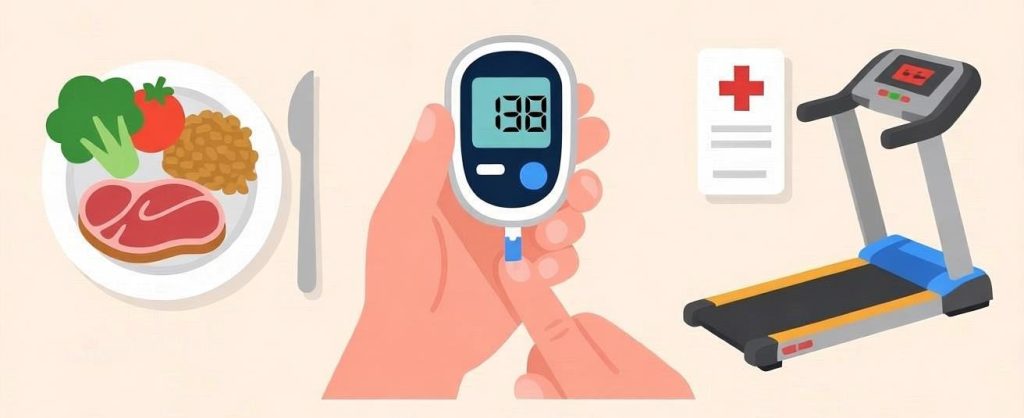
Why Does Diabetes Happen in the First Place?
There’s rarely a single villain in the diabetes story. For most people, it’s a stack of smaller factors that eventually tip the scales. Here are the usual suspects, from the perspective of both genes and daily habits:
- Genetics: If a parent or sibling has type 2 diabetes, your risk climbs. Some communities — including South Asian, African, Hispanic, and Indigenous populations — also carry higher inherited risk.
- Extra weight around the middle: Visceral fat, the deep belly kind, releases chemicals that make your cells increasingly stubborn about responding to insulin.
- Inactivity: Muscle is one of your body’s biggest glucose consumers. Sit still all day, and that glucose has nowhere to go.
- Age and history: Risk rises after 45, and women who’ve had gestational diabetes or PCOS carry extra risk.
- Autoimmune triggers (type 1): For reasons still being studied, the immune system mistakenly attacks insulin-producing cells, often starting in childhood or the teen years.
What Diabetes Actually Feels Like
Here’s the tricky part: diabetes is famously quiet in its early stages. Ask ten people what it felt like, and half will tell you they had no idea — they thought they were “just tired” or “just thirsty lately.” Others describe symptoms they only recognized in hindsight. The most common early warning signs include:
- Constant thirst paired with nonstop bathroom trips, especially waking at night to pee
- Blurry vision that comes and goes, as high sugar pulls fluid from the lenses of your eyes
- Tingling or numbness in hands and feet, and cuts or bruises that heal slowly
- Energy crashes — the kind of exhaustion a nap doesn’t fix
- Unexplained weight loss despite eating normally (more typical of type 1)
- Recurring yeast infections, gum problems, or skin that’s slow to bounce back
From the patient’s chair, the diagnosis itself often feels like a mixed bag: relief at finally having an explanation, grief over the changes ahead, and a heavy dose of guilt. “I thought I did this to myself” is something diabetes educators hear constantly — and constantly push back on.
Genes load the gun; lifestyle may pull the trigger, but nobody chooses their genes. If you’ve just been diagnosed, go easy on yourself. This is a condition to manage, not a punishment to endure.
Type 1, Type 2, and Gestational Diabetes
People toss around “type 1” and “type 2” as if they’re interchangeable, but they’re genuinely different conditions that simply share the same destination: high blood sugar. Here’s a quick cheat sheet to keep them straight:
| Type | Who It Usually Affects | What’s Going On | Typical Treatment |
|---|---|---|---|
| Type 1 | Often kids, teens, and young adults | Immune system destroys insulin-producing cells; insulin supply disappears | Lifelong insulin via injections or pump |
| Type 2 | Usually adults over 45, though increasingly younger people too | Cells resist insulin; over time the pancreas can’t keep up | Lifestyle changes, metformin, sometimes insulin |
| Gestational | Pregnant women, typically around weeks 24–28 | Placental hormones block insulin’s effect | Meal planning, activity, sometimes insulin; often resolves after birth |
| Prediabetes | Approximately 1 in 3 adults | Blood sugar runs high, but below the diabetes range | Lifestyle changes can sharply cut the risk of progression |
Why Catching It Early Matters?
Physicians tend to get straight to the numbers, and for good reason. Prediabetes — that gray zone where blood sugar runs high but hasn’t crossed into diabetes — is remarkably common, yet most people who have it have no clue, because it often causes zero symptoms.
An A1C test, which reflects your average blood sugar over about three months, can flag the problem years before complications begin. Caught early, the condition often responds to changes no more dramatic than walking more and shrinking portion sizes.
The reason doctors push so hard for early detection is what unmanaged diabetes quietly does over time: damage to small blood vessels in the eyes, kidneys, and nerves, and to the large vessels feeding the heart and brain. None of that happens overnight. Which is exactly why the quiet years are the best years to act — every point you lower your A1C early pays dividends for decades.
How To Adjust Your Diet For Diabetes?
Ask a registered dietitian about the “diabetes diet,” and you’ll probably get a polite wince. There is no single diabetes diet — there’s your diet, tuned to your body, your culture, your budget, and your schedule.
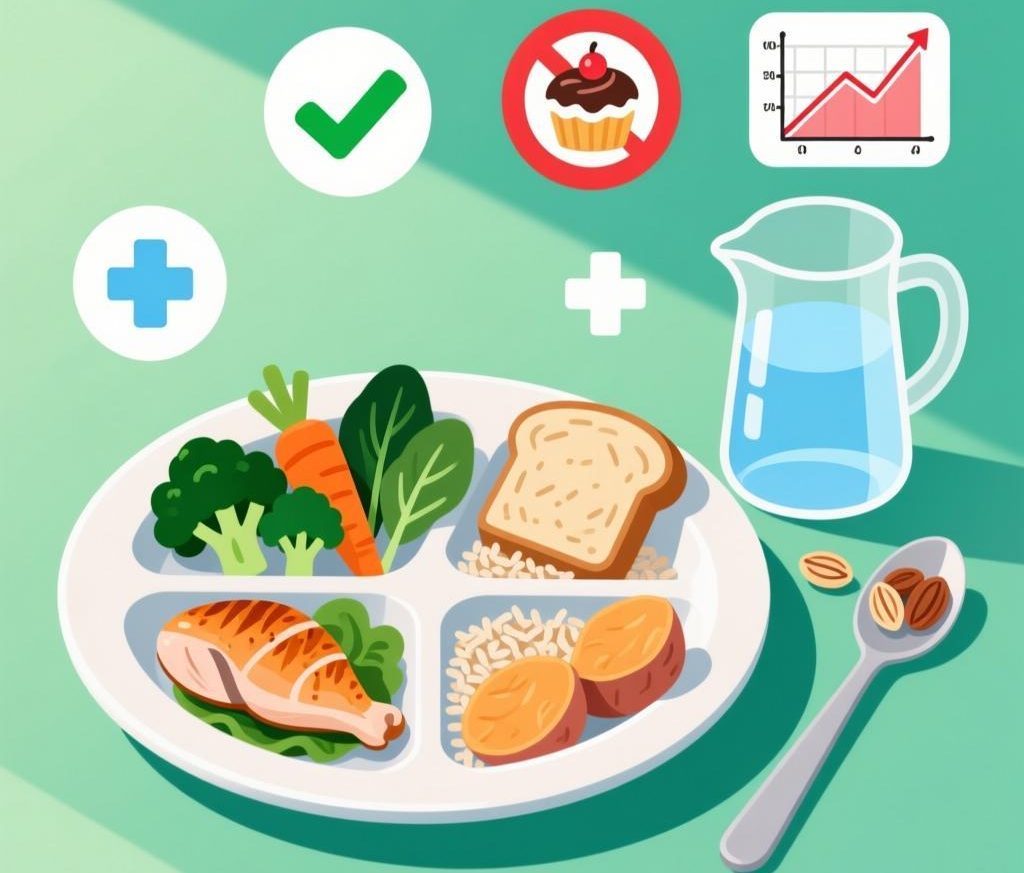
The core principles are simpler than most people expect: keep carbohydrate portions consistent from meal to meal, favor carbs that digest slowly (fiber-rich whole grains, beans, vegetables), and pair carbs with protein or healthy fat so sugar enters your bloodstream at a gentler pace.
Small swaps compound over time. A few realistic examples that actual humans tend to stick with:
| Instead of… | Try… |
|---|---|
| Sugary soda | Sparkling water with a squeeze of lemon or lime |
| White bread | 100% whole-grain bread or high-fiber wraps |
| Fruit juice | A whole piece of fruit — the fiber slows the sugar down |
| A big plate of white rice | A smaller portion, half swapped for lentils or cauliflower rice |
| Sugary breakfast cereal | Steel-cut oats topped with nuts and berries |
What You Or Your Family Members Can Do?
Diabetes is often called a “family disease,” because the changes that help most are easier — and far more pleasant — when everyone joins in. Partners and kids usually ask what they can do, and diabetes educators give the same answer: change together, don’t police separately. Cooking one shared meal instead of a “special plate” for one person removes stigma overnight.
Trading an after-dinner scroll for a 15-minute walk improves everyone’s blood sugar — yes, including yours. And asking “What can I do to help?” instead of “Should you be eating that?” keeps relationships intact, which turns out to be genuinely good medicine.
How to Manage Diabetes Day to Day?
Management sounds clinical, but in real life it’s a handful of small, repeatable habits. The people who do best long-term tend to build routines like these:
- Know your numbers: Ask your care team what A1C, blood pressure, and cholesterol targets make sense for you — and write them down.
- Move after meals: A 10–15 minute walk after eating noticeably blunts post-meal blood sugar spikes. Your muscles literally soak up glucose as you go.
- Build plates, not math equations: Half vegetables, a quarter protein, a quarter carbs. Easier than counting every gram, and it works.
- Take medications as prescribed: Even on good days. Skipping doses to “make up for” a bad meal never balances anything out.
- Guard your sleep: Poor sleep quietly raises insulin resistance. Aim for seven hours or more.
- Check your feet daily: A 30-second scan for cuts, blisters, or red spots catches small problems before they become big ones — nerve damage can hide them.
- Keep something sweet in your bag: Glucose tablets or a juice box are for low blood sugar emergencies, not snacks — but when you need one, you really need one.
- Show up for check-ups: Yearly eye exams, kidney monitoring, and a dentist who knows you have diabetes — because it touches all of them.
4 Frequently Asked Questions About Diabetes
1. Can diabetes be cured or reversed?
Honest answer: it depends on the type. Type 1 can’t be reversed — the insulin-producing cells are gone. Type 2, however, can go into remission, meaning blood sugar returns to normal range without medication. Remission is most achievable with significant, sustained weight loss soon after diagnosis.
Even if full remission isn’t in the cards, the same habits usually shrink how much medication you need. Think “remission you actively maintain” rather than “cured and done.”
2. Does eating too much sugar cause diabetes?
Directly? No. Indirectly? Yes, it can contribute. Sugar itself isn’t the villain — but sugary drinks and calorie-dense foods make weight gain easy, and excess weight around the abdomen is one of the strongest drivers of type 2 diabetes. So the donut didn’t do it alone; years of pattern did. And to be clear, nobody’s lifestyle causes type 1 — that’s an immune-system event, not a dietary one.
3. Can I still eat fruit and carbs if I have diabetes?
Absolutely — and you should. Fruit comes packaged with fiber, water, and vitamins that slow sugar absorption; a whole apple behaves very differently in your body than a glass of apple juice.
The same logic applies to carbs generally: beans, oats, barley, and whole grains digest slowly and keep blood sugar steady. The trick is portion and pairing — one serving of carbs at a time, ideally alongside protein or fat, rather than a mountain of them alone.
4. How often should I check my blood sugar?
It depends on your treatment. If you take insulin, you’ll likely check several times a day — before meals, before driving, before bed. If you manage with lifestyle changes alone or metformin, your doctor may suggest far less frequent checking, or rely mainly on your quarterly A1C.
Continuous glucose monitors are changing this conversation fast, offering real-time data with no fingersticks. The right answer is genuinely personal, so build a routine with your care team — not with an internet forum.
The Bottom Line
Diabetes is common, manageable, and — despite its scary reputation — deeply responsive to ordinary human habits: walking after dinner, filling half your plate with vegetables, taking your meds, sleeping enough, and keeping your check-ups.
It asks for consistency, not perfection. Miss a day? Begin again. If you recognize yourself in the symptoms above, don’t sit on it — a simple blood test can tell you where you stand, and the earlier you know, the more power you have. That’s the real 101.