
Two years ago, I stood on my bathroom scale at 205 pounds and made a promise to myself: I would finally get serious about my health. Like most people beginning a weight loss journey, I was overwhelmed by conflicting advice.
Should I run? Lift weights? Cut carbs? After months of trial and error, I narrowed my focus to two low-impact options that kept appearing in every “sustainable fitness” conversation: Pilates and yoga.
What followed was twelve months of personal experimentation—six months dedicated to each practice—and the results genuinely surprised me.
This is my honest, unfiltered comparison of both methods, written for anyone who has ever wondered whether rolling out a mat could actually change their body.
Why I Chose Pilates and Yoga for Weight Loss
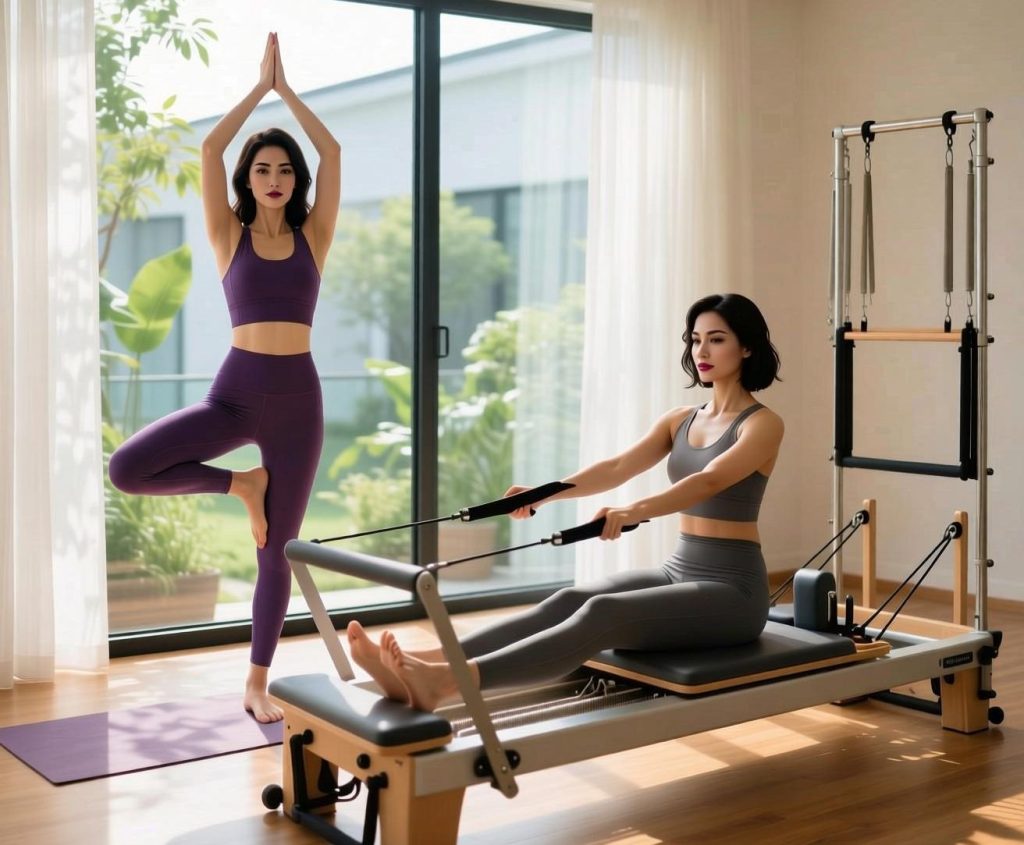
Before diving into my results, I want to explain my reasoning. As someone carrying extra weight with knee pain and notoriously poor flexibility, high-intensity interval training and running left me injured and demoralized. I needed something sustainable—something I would actually do four to five times per week without dreading it.
- Low-impact friendly: Both practices are gentle on joints, crucial for anyone starting at a higher body weight.
- Minimal equipment: A mat and a small corner of my living room were enough to begin.
- Stress reduction: I suspected, correctly as it turned out, that my emotional eating was tied to chronic stress hormones like cortisol.
- Scalability: Both practices offer modifications for beginners and challenges for advanced practitioners.
- Home workout potential: Countless free and subscription-based online classes meant no intimidating gym environment.
The science supported my choice too. Research consistently shows that consistent, moderate exercise outperforms sporadic, intense workouts for long-term weight management. The question wasn’t whether these practices could help—it was which one would help me more.
My Six Months with Pilates
I started with mat Pilates three times a week, gradually building to five 45-minute sessions. For the first two weeks, I was humbled. Exercises like the hundred, single-leg stretches, and teaser moves exposed muscles I didn’t know I had. My core trembled during what looked like deceptively simple movements.
By month three, the changes were measurable. I lost 11 pounds in the first six weeks of Pilates—more than I expected from such a “gentle” practice. My instructor explained why: Pilates builds lean muscle mass, particularly in the core, glutes, and thighs, and muscle tissue burns more calories at rest than fat tissue. My resting metabolic rate was literally increasing.
| Metric | Month 1 | Month 3 | Month 6 |
|---|---|---|---|
| Weight | 205 lbs | 196 lbs | 188 lbs |
| Waist circumference | 38.5″ | 36″ | 34″ |
| Plank hold time | 22 seconds | 1 min 40 sec | 3 min 10 sec |
| Weekly sessions | 3 | 4 | 5 |
Beyond the numbers, Pilates changed my posture dramatically. Years of desk work had given me a forward head tilt and rounded shoulders. As my alignment improved, I noticed I was walking taller and—this surprised me—eating more mindfully.
There’s something about a practice centered on precise control that carried over into my food choices. I found myself pausing before reaching for snacks, asking whether I was actually hungry.
The downsides were real, though. Reformer classes at my local studio cost $30 per session, which adds up fast. Mat Pilates at home was free, but I plateaued around month four without adding resistance bands and small weights.
Pilates also burns fewer calories per session than I’d hoped—roughly 175 to 250 calories for a 45-minute mat session at my body weight. I had to pair it with dietary changes to keep seeing results.
My Six Months with Yoga
After six months of Pilates, I switched to yoga, expecting it to feel easy. I was wrong again. Vinyasa flows had my heart rate climbing into fat-burning zones within fifteen minutes, and power yoga sessions left me drenched.
I committed to four weekly sessions: two vinyasa or power classes for calorie burn, one yin or restorative class for recovery, and one hatha class for foundational strength.
Yoga’s weight loss impact came through a different door than Pilates. Rather than primarily building calorie-burning muscle, yoga transformed my relationship with food and stress.
The breathwork and meditation components genuinely reduced my stress-driven snacking. Studies I later read confirmed my experience: mindfulness practices reduce cortisol levels, and elevated cortisol is strongly linked to abdominal fat storage.
My results over six months of yoga:
- Weight loss: 13 pounds (slightly more than my Pilates period, largely because I’d maintained the muscle base from Pilates)
- Flexibility gains: I touched my toes for the first time in my adult life by month two
- Sleep quality: Falling asleep faster and waking less, which research links to better appetite hormone regulation
- Calorie burn variance: Power yoga burned 300 to 400 calories per session; restorative yoga burned closer to 120
- Emotional eating: Reduced by an estimated 60 to 70 percent based on my food journal
The challenge with yoga was consistency of intensity. A restorative class is wonderful for recovery but does almost nothing for weight loss directly. My progress depended heavily on choosing vigorous styles most days. Additionally, some yoga classes moved slowly for my goals—lots of standing around in poses when I wanted to keep moving.
Pilates vs. Yoga for Weight Loss
Having completed twelve months across both practices, here is my honest side-by-side evaluation based on the factors that mattered most in my journey:
| Factor | Pilates | Yoga |
|---|---|---|
| Avg. calories burned (45 min, my weight) | 175–250 | 120–400 (style-dependent) |
| Muscle building | Excellent, especially core | Moderate |
| Flexibility improvement | Moderate | Excellent |
| Stress/emotional eating relief | Moderate | Excellent |
| Metabolism boost at rest | High (lean mass gain) | Moderate |
| Beginner learning curve | Moderate | Easy to start, deep to master |
| Cost of home practice | Low (bands optional) | Very low (mat only) |
| Best for plateau-breaking | Adding resistance | Vinyasa/power styles |
If I had to summarize: Pilates sculpted my body and raised my resting metabolism, while yoga healed my mind and fixed the behaviors that caused weight gain in the first place. Neither alone was a magic bullet. The diet component remained essential—no amount of mat work out-trains a poor diet.
I Didn’t Have To Choose
Month thirteen brought my biggest realization: I didn’t have to choose. I now do three Pilates sessions and two to three yoga sessions weekly, and this hybrid approach produced my best results of all—another 9 pounds over the following four months, bringing my total loss to 33 pounds.
Here’s my ideal weekly schedule that anyone can adapt:
- Monday: Mat Pilates (core focus) — 45 minutes
- Tuesday: Vinyasa yoga (cardio-style flow) — 60 minutes
- Wednesday: Rest or 20-minute walk
- Thursday: Mat Pilates (glutes and legs) — 45 minutes
- Friday: Power yoga — 45 minutes
- Saturday: Pilates with resistance bands — 40 minutes
- Sunday: Yin or restorative yoga — 30 minutes
This structure uses Pilates for strength and metabolic benefits, vigorous yoga for cardio and calorie burn, and gentle yoga for recovery and stress management. The variety also prevents the boredom that killed my previous fitness attempts.
How Much Weight Can You Actually Lose?
I want to be brutally honest about expectations because unrealistic hopes derail more journeys than bad workout plans. Pilates and yoga are not aggressive fat-burning machines like HIIT or running. Expect gradual, sustainable loss of 0.5 to 1 pound per week when combined with sensible nutrition—which is exactly the rate research says keeps weight off permanently.
My total timeline looked like this: 11 pounds in six months of Pilates, 13 pounds in six months of yoga (with muscle base advantage), and 9 pounds in four months of combined practice. That’s 33 pounds in roughly 16 months. Not dramatic reality-TV transformation speed—but two years later, I’ve kept every pound off, which no crash diet ever achieved for me.
The non-scale victories mattered just as much: a 4.5-inch smaller waist, freedom from knee pain, dramatically better sleep, and a fundamentally changed relationship with food. When the scale stalls—because it will—these wins keep you going.
FAQ: Does Pilates or Yoga Burn More Calories?
It depends entirely on style and intensity. In my experience using a fitness tracker, a 45-minute mat Pilates session burned 175 to 250 calories at my body weight, while power yoga and fast vinyasa flows burned 300 to 400 calories. However, gentle yin yoga burned as few as 120 calories.
The calorie-burning crown goes to vigorous yoga styles session-by-session, but Pilates builds muscle that raises your resting metabolism around the clock. For pure per-session burn, choose power yoga; for long-term metabolic benefit, choose Pilates—ideally, do both like I do.
FAQ: Can You Really Lose Weight with Just Pilates and Yoga Without Dieting?
Honest answer: probably not much. I tried my first eight weeks of Pilates without changing my eating habits and lost only 2 pounds. Once I implemented a modest calorie deficit—roughly 400 calories below maintenance, prioritizing protein and vegetables—my results accelerated immediately.
Exercise builds the engine; diet controls the fuel. That said, both practices made eating better dramatically easier. Yoga’s mindfulness reduced my stress eating, and Pilates made me feel more connected to my body, so I naturally craved nourishing food over junk. The practices don’t replace dietary changes; they make those changes feel effortless.
FAQ: Which Is Better for Beginners Who Are Overweight?
Based on my experience starting at 205 pounds with knee pain, I recommend beginning with gentle yoga and beginner mat Pilates simultaneously, then specializing. Restorative and chair yoga classes helped me build confidence and basic mobility without strain, while beginner Pilates taught me core engagement safely.
Avoid jumping into power yoga or advanced reformer classes in month one—they can cause strains that sideline you for weeks. Look for instructors who offer modifications, and never feel embarrassed using them.
Everyone in class was a beginner once, and honestly, most people are focused on their own mats, not yours. If gym anxiety is a barrier, start with free YouTube classes at home, as I did for my first month.
FAQ: How Long Before I See Visible Results?
Here’s my realistic timeline. Weeks 1 to 3: better energy, improved sleep, less bloating—feel great, look the same. Weeks 4 to 8: clothes fit looser around the waist; you notice subtle tone in your arms and shoulders.
Months 3 to 4: visible changes others comment on; significantly improved posture that makes you look leaner instantly. Months 6 and beyond: meaningful transformation, especially with photos for comparison.
My biggest tip: take front, side, and back photos on day one and monthly after. The scale fluctuates frustratingly, but photos reveal truth. Also measure your waist—Pilates especially tightens the core in ways the scale doesn’t always reflect, since you’re gaining muscle while losing fat.
FAQ: Should I Do Pilates or Yoga Every Day for Faster Weight Loss?
Counterintuitively, no. I learned this the hard way when I attempted daily Pilates in month two and developed lower back fatigue that set me back two weeks. Muscles need 24 to 48 hours to recover and grow, and recovery is when the metabolic benefits actually develop.
My optimal frequency turned out to be 5 sessions weekly with 2 rest or gentle stretching days. If you crave daily movement, alternate muscle groups—Pilates core on Monday, yoga legs on Tuesday—and use restorative yoga on recovery days.
Rest is not laziness; it’s when your body converts your work into results. Chronic overtraining elevates cortisol, the exact hormone that promotes belly fat storage, making daily intense practice genuinely counterproductive for weight loss.
My Final Verdict After 12 Months on the Mat
If you forced me to pick one practice for weight loss, I’d choose yoga for its behavioral and stress-reduction benefits—but only if you commit to vigorous styles at least three times weekly.
If your priority is body sculpting, core strength, and raising your resting metabolism, Pilates edges ahead. But honestly, the either/or framing is the wrong question. My 33-pound loss came from combining both with a sustainable calorie deficit, adequate protein, and patience with the process.
Neither practice will out-exercise a poor diet, and neither delivers overnight transformation. What they offer instead is something more valuable: a sustainable, enjoyable movement practice you can maintain for life, wrapped in stress relief and body awareness that fix the root causes of weight gain.
Roll out your mat, start with twenty minutes, and trust the compound effect of showing up consistently. Your future self—the one who moves without pain, sleeps deeply, and feels at home in their body—is waiting on the other side of that first session.