When your goal is sustainable weight loss, dinner is the meal where most plans succeed or collapse. A thoughtfully built high-protein dinner does more than fill you up — it steadies blood sugar, curbs late-night snacking, and protects lean muscle while your body burns fat.
Below, you’ll find seven dinner recipes designed by nutrition principles rather than trends, each paired with the science of why protein works, practical meal-prep guidance, and answers to the questions people ask most often.
Why Protein Is the Cornerstone of Weight-Loss Dinners?
Protein earns its reputation for three well-documented reasons. First, it is the most satiating macronutrient: higher-protein meals consistently increase feelings of fullness and reduce subsequent hunger compared with lower-protein alternatives.
Second, protein carries the highest thermic effect of food (TEF) of any macronutrient — roughly 20–30% of protein calories are burned simply digesting and metabolizing it, compared with 5–10% for carbohydrates and 0–3% for fat.
Third, during a calorie deficit, adequate dietary protein helps preserve lean muscle mass, which keeps your resting metabolic rate from sliding downward as you lose weight.
From a behavioral standpoint, protein also solves the most common failure point of any diet: evening hunger. A dinner built around 30–40 grams of high-quality protein, combined with fiber-rich vegetables and slow-digesting carbohydrates, typically carries people comfortably through to breakfast without the pantry raids that undo an otherwise disciplined day.
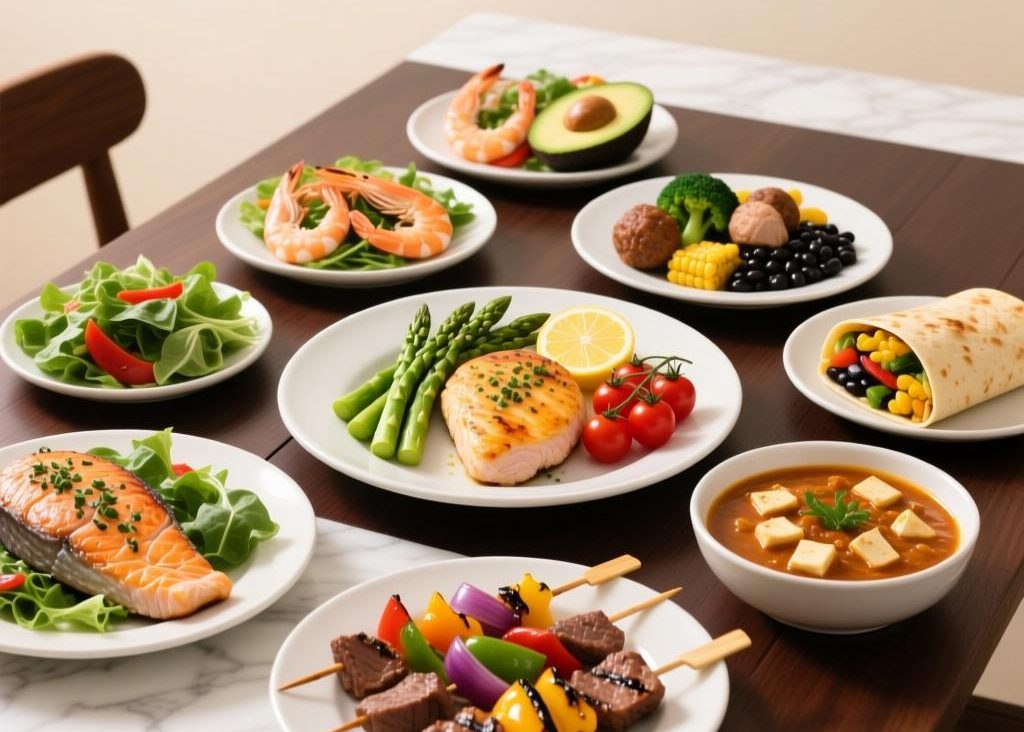
The 7 Recipes at a Glance
Each recipe below delivers at least 28 grams of protein per serving while staying calorie-conscious, in line with evidence that meals containing 15 grams or more of protein support satiety and healthy weight loss. Here is how they compare:
| Recipe | Protein | Calories | Prep Time | Best For |
|---|---|---|---|---|
| Garlic Butter Shrimp with Zucchini Noodles | 35g | 320 | 20 min | Low-carb nights |
| Lemon Herb Grilled Chicken with Quinoa | 40g | 450 | 30 min | Balanced macro days |
| Baked Salmon with Asparagus & Sweet Potato | 38g | 480 | 35 min | Omega-3 boost |
| Turkey & Black Bean Chili | 30g | 380 | 40 min | Batch cooking |
| Tofu & Edamame Stir-Fry with Brown Rice | 28g | 420 | 25 min | Plant-based eaters |
| Greek Yogurt Chicken Salad Lettuce Wraps | 35g | 350 | 15 min | No-cook evenings |
| Sheet-Pan Lean Steak with Broccoli & Farro | 42g | 500 | 30 min | Training days |
Recipe 1: Garlic Butter Shrimp with Zucchini Noodles
Shrimp is one of the leanest complete proteins available, offering roughly 24 grams of protein per 100 grams with minimal fat. Sauté 200 grams of shrimp in one teaspoon of butter with minced garlic, a pinch of red pepper flakes, and a squeeze of lemon for about three minutes per side.
Spiralize two medium zucchini, toss them in the same pan for two minutes, and finish with fresh parsley. The zucchini keeps the carbohydrate load low while contributing fiber and volume, and the entire plate lands near 320 calories — ideal for lower-activity rest days when energy needs dip.
Recipe 2: Lemon Herb Grilled Chicken with Quinoa
Chicken breast remains the gold standard of weight-loss protein: inexpensive, versatile, and around 31 grams of protein per 100 grams. Marinate a 150-gram breast in lemon juice, olive oil, oregano, and garlic for at least 30 minutes, then grill until the internal temperature reaches 74°C (165°F).
Serve over half a cup of cooked quinoa with roasted cherry tomatoes and cucumber. Quinoa is a rare plant-based complete protein and adds roughly 4 grams of protein plus 5 grams of fiber, creating a meal that satisfies for hours. This is the dinner to reach for on days when you have trained or expect a longer gap before breakfast.
Recipe 3: Baked Salmon with Asparagus and Sweet Potato
Fatty fish brings something chicken cannot: omega-3 fatty acids (EPA and DHA), which are associated with reduced inflammation and improved metabolic health. Place a 150-gram salmon fillet on a sheet pan with asparagus spears and cubed sweet potato, drizzle with olive oil, season with salt, pepper, and dill, and bake at 200°C (400°F) for 18–20 minutes.
The sweet potato provides slow-release carbohydrates that replenish glycogen without spiking blood sugar, making this the most balanced plate of the seven. It works especially well as a post-workout dinner or on days when cravings for richer foods tend to appear.
Recipe 4: Turkey and Black Bean Chili
Ground turkey (93% lean) combined with black beans produces a chili that delivers both animal and plant protein plus a substantial fiber payload. Brown 150 grams of turkey with diced onion, add one can of drained black beans, a can of diced tomatoes, chili powder, cumin, and smoked paprika, then simmer for 25 minutes.
A single bowl offers about 30 grams of protein and 12 grams of fiber — a combination that research links to stronger appetite control and better digestive health. Chili also happens to be one of the best batch-cooking meals in existence: it freezes beautifully and often tastes better on day two.
Recipe 5: Tofu and Edamame Stir-Fry with Brown Rice
Plant-based eaters need not sacrifice protein. Press and cube 200 grams of firm tofu, pan-sear until golden, then stir-fry with shelled edamame, bell peppers, snap peas, and broccoli in a sauce of low-sodium soy sauce, ginger, garlic, and a touch of sesame oil. Serve over half a cup of brown rice.
Tofu and edamame together contribute roughly 28 grams of complete protein, and the soy isoflavones add potential cardiovascular benefits. Research comparing omnivorous and vegetarian protein sources during energy restriction found both approaches can be effective for satiety and weight management when protein quantity is matched.
Recipe 6: Greek Yogurt Chicken Salad Lettuce Wraps
For nights when cooking feels impossible, this no-cook option assembles in fifteen minutes. Shred leftover rotisserie or poached chicken breast, then fold it into plain Greek yogurt with diced celery, red grapes, slivered almonds, Dijon mustard, and lemon zest. Spoon the mixture into large butter lettuce leaves.
Swapping mayonnaise for Greek yogurt cuts fat dramatically while adding roughly 10 grams of extra protein per half cup, and the lettuce cups replace bread with a crisp, nearly calorie-free vessel. This recipe also solves one of meal prep’s biggest challenges: using up leftover protein without repeating the same flavor profile.
Recipe 7: Sheet-Pan Lean Steak with Broccoli and Farro
Red meat is often unfairly excluded from weight-loss plans, yet lean cuts such as sirloin or flank steak deliver exceptional protein density along with iron, zinc, and vitamin B12 — nutrients many dieters fall short on.
Season a 150-gram sirloin with salt, pepper, and smoked paprika, roast alongside broccoli florets at 220°C (425°F) for 12–15 minutes, and serve over a third of a cup of cooked farro.
The entire meal lands near 500 calories with 42 grams of protein, making it the most substantial option here and a strong choice on heavy training days or when the next day involves significant physical activity.
How to Build These Recipes Into Your Weekly Routine?
Consistency beats perfection. A practical approach from experienced meal preppers is to cook two or three of these recipes on Sunday, portion them into airtight containers, and rotate through the week. Chili and the chicken salad hold up especially well; shrimp and steak are best cooked fresh or reheated gently. A simple framework:
- Batch two proteins (for example, grilled chicken and turkey chili) and pair them with different sides to avoid flavor fatigue.
- Wash and chop vegetables in advance so a fresh dinner assembles in under 15 minutes on busy nights.
- Keep frozen shrimp, edamame, and salmon portions on hand as emergency proteins that cook from frozen in minutes.
- Match your dinner to your day: lighter recipes (shrimp, lettuce wraps) on sedentary days, heartier ones (steak, salmon) on training days.
How Much Protein Should I Eat at Dinner for Weight Loss?
Most evidence points to 25–40 grams of protein per meal as the sweet spot for maximizing satiety and muscle protein synthesis during a calorie deficit.
For a typical adult eating three meals daily, that translates to roughly 1.2–1.6 grams of protein per kilogram of body weight per day, with dinner carrying a meaningful share.
Athletes and those with higher lean mass may benefit from the upper end of that range. Spreading protein across meals — rather than loading it all at dinner — appears to support fullness more consistently throughout the day.
Are High-Protein Dinners Suitable for Vegetarians and Vegans?
Absolutely, though the strategy shifts slightly. Plants deliver protein alongside fiber and phytonutrients, but many individual plant proteins are lower in one or more essential amino acids.
The solution is simple variety: combining legumes with grains (rice and beans, tofu with brown rice, hummus with whole-grain pita) produces a complete amino acid profile over the course of a day. Edamame, tempeh, seitan, lentils, and Greek-style soy yogurt are among the densest plant protein sources.
The tofu and edamame stir-fry above demonstrates how two complementary plant proteins in one dish can rival the protein content of a meat-based meal.
Can I Meal Prep These Recipes in Advance?
Yes — with a few food-safety and quality guidelines. Cooked chicken, chili, and farro keep well for four days refrigerated. Salmon is best within two days, and shrimp should be eaten within 48 hours of cooking.
Store sauces separately when possible to prevent sogginess, reheat to an internal temperature of 74°C (165°F), and freeze anything you will not finish within four days.
Many people find that prepping proteins and grains in bulk while keeping vegetables fresh gives the best balance of convenience and texture, letting a “fresh” dinner come together in ten minutes on a weeknight.
Do High-Protein Diets Have Any Side Effects?
For most healthy adults, increasing protein within a balanced diet poses no risk. However, a few considerations deserve attention. People with pre-existing kidney disease should consult a clinician before raising protein intake substantially.
Very high protein diets that crowd out carbohydrates and fiber can cause digestive discomfort or constipation, which is why every recipe above pairs protein with vegetables, legumes, or whole grains.
Hydration matters too, as protein metabolism requires adequate water. Finally, protein is not a free pass on calories: a dinner of 600 calories still contributes to your daily total, and weight loss ultimately depends on sustained energy balance.
What Sides Pair Best With High-Protein Dinners?
The best sides share three traits: high fiber, high water content, and low calorie density. Non-starchy vegetables — broccoli, asparagus, zucchini, leafy greens, peppers, cauliflower — can fill half your plate for minimal calories while adding vitamins and volume.
Slow-digesting carbohydrates such as quinoa, farro, sweet potato, and brown rice are smart additions on active days, typically in half-cup portions.
A small amount of healthy fat (olive oil, avocado, nuts) improves flavor and the absorption of fat-soluble vitamins, but measuring it matters: fats deliver nine calories per gram.
The principle behind every recipe above is the same — anchor the plate with protein, surround it with fiber, and treat fat and starch as intentional, measured additions rather than afterthoughts.
The Bottom Line
Weight-loss dinners fail when they leave you hungry; they succeed when they satisfy. These seven recipes — spanning poultry, seafood, red meat, and plant-based options — prove that a calorie-conscious dinner can still taste like food you would choose on vacation.
Anchor each plate with 25–40 grams of protein, add fiber-rich vegetables and sensible carbohydrates, prep a couple of options ahead of time, and the evening meal transforms from the diet’s weakest link into its strongest ally.