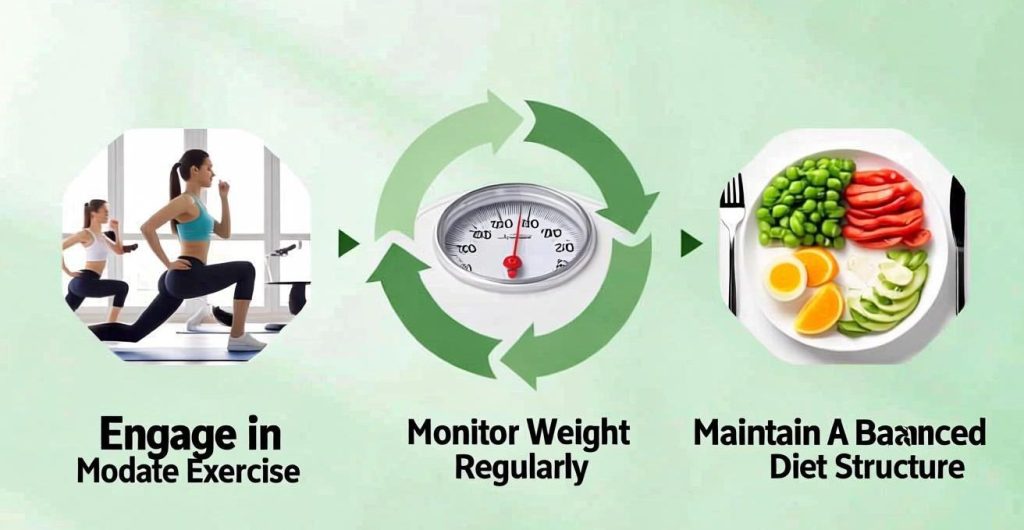
Glucagon-like peptide-1 (GLP-1) is an incretin hormone naturally produced in the gut after eating. It plays a crucial role in regulating blood glucose levels and appetite.
Specifically, GLP-1 enhances insulin secretion when blood sugar is high, suppresses glucagon secretion (which raises blood sugar), slows gastric emptying (making you feel fuller for longer), and acts on the brain to reduce appetite.
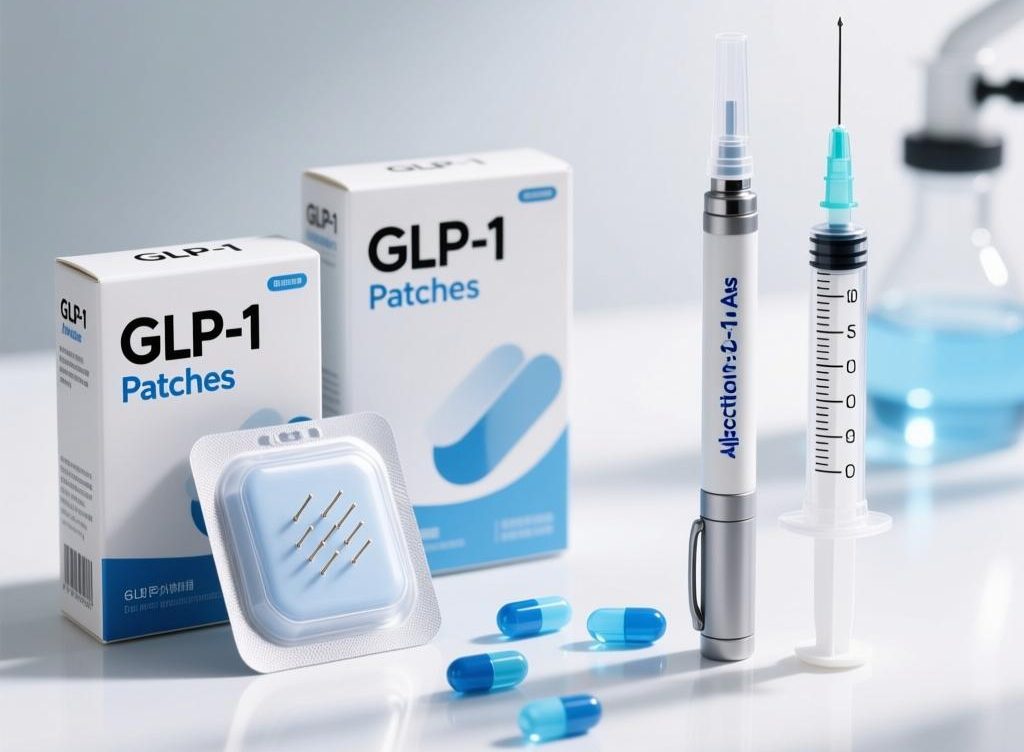
These combined effects make GLP-1 receptor agonists (GLP-1 RAs) – medications that mimic the action of GLP-1 – highly effective for managing type 2 diabetes. More recently, their significant impact on weight loss has led to their widespread adoption, and now exploration, as dedicated weight loss therapies.
Currently, GLP-1 RAs are primarily administered via subcutaneous injection (e.g., semaglutide – Ozempic, Wegovy; liraglutide – Saxenda; dulaglutide – Trulicity).
These injections have demonstrated substantial weight loss results in clinical trials, ranging from 5-15% of initial body weight, depending on the specific drug, dosage, and lifestyle interventions. The desire for a more convenient delivery method has fueled the development of transdermal GLP-1 patches.
The Promise of Transdermal Delivery
The appeal of a GLP-1 patch is obvious: convenience and potentially improved patient adherence. Subcutaneous injections, while effective, can be intimidating for some, leading to inconsistent use.
A patch, applied to the skin, offers a needle-free alternative. However, delivering a peptide drug like GLP-1 through the skin presents significant challenges.
The skin is designed as a barrier – a remarkably effective one – to prevent foreign substances from entering the body. The stratum corneum, the outermost layer of the epidermis, is composed of tightly packed dead skin cells, creating a nearly impermeable shield.
For a GLP-1 molecule to be absorbed through the skin, it must traverse this barrier. Current patch technologies attempt to overcome this using several strategies:
- Microneedles: These microscopic needles create tiny channels in the stratum corneum, allowing the GLP-1 to bypass the barrier.
- Chemical Enhancers: Certain chemicals can temporarily disrupt the structure of the stratum corneum, increasing permeability.
- Liposomes & Nanoparticles: Encapsulating GLP-1 within liposomes or nanoparticles may improve its ability to penetrate the skin.
- Electroporation: Using a brief electrical pulse to create temporary pores in the skin.
- Sonophoresis: Using ultrasound to enhance drug delivery.
The theoretical advantage of a patch is a more sustained, consistent release of GLP-1 over a longer period, potentially mimicking the natural hormonal fluctuations more closely than a single injection. However, achieving therapeutically relevant concentrations of GLP-1 in the bloodstream via a patch remains the primary hurdle.
Current Status of GLP-1 Patch Development
Several companies are actively developing GLP-1 patches, and clinical trial data is emerging. It’s crucial to understand that no GLP-1 patch is currently FDA-approved for weight loss or diabetes management.
The research is primarily in Phase 1 and Phase 2 trials, meaning initial safety and preliminary efficacy are being evaluated. Here’s a breakdown of what the data reveals:
- Early Phase 1 Trials (Safety & Tolerability): Most early trials have focused on demonstrating the safety and tolerability of different patch formulations. Generally, these trials have shown that the patches are reasonably well-tolerated, with local skin reactions (redness, irritation) being the most common side effects. Systemic side effects have been infrequent.
- Phase 2 Trials (Pharmacokinetics & Preliminary Efficacy): Phase 2 trials are designed to assess how the drug is absorbed (pharmacokinetics) and provide early indications of efficacy. These trials have yielded mixed results. Some studies have shown that the patches can deliver detectable levels of GLP-1 into the bloodstream, but these levels are often significantly lower than those achieved with subcutaneous injections. Preliminary weight loss data has been reported in some studies, but the magnitude of weight loss is generally less than that observed with injections.
- Challenges with Bioavailability: The biggest challenge consistently reported is low bioavailability – the percentage of the administered dose that actually reaches systemic circulation. Skin permeability remains a major limitation, and a significant portion of the GLP-1 is likely degraded within the skin before it can be absorbed.
- Specific Examples: Several companies like Novo Nordisk, Clearside Pharma and others are actively researching various GLP-1 patch technologies. Data presented at medical conferences have shown varying degrees of success, with some formulations demonstrating improved bioavailability compared to others. However, the long-term efficacy and durability of the effects remain unknown.
It’s critical to emphasize that much of the available data is preliminary and often presented at conferences rather than published in peer-reviewed journals. This makes it difficult to critically assess the validity and reliability of the findings.
Comparing GLP-1 Patches to Injectable GLP-1 RAs
Let’s directly compare GLP-1 patches (based on current research) to established injectable GLP-1 RAs:
| Feature | Injectable GLP-1 RAs | GLP-1 Patches |
| FDA Approval | Yes (for diabetes & obesity) | No |
| Bioavailability | High (typically >80%) | Low to Moderate (variable, often <50%) |
| Weight Loss Efficacy | 5-15% initial body weight | Preliminary data suggests lower weight loss |
| Blood Glucose Control | Highly effective | Effectiveness still under investigation; likely lower than injections |
| Delivery Method | Subcutaneous injection | Transdermal patch |
| Convenience | Requires injection skill/comfort | More convenient, needle-free |
| Adherence | Can be a barrier due to injections | Potentially better adherence |
| Side Effects | Nausea, vomiting, diarrhea, constipation | Primarily local skin reactions (redness, irritation) |
| Cost | Relatively high | Potentially similar or lower cost than injections (depending on manufacturing) |
This table illustrates the current trade-offs. Injectables offer proven efficacy but have the inconvenience of injections. Patches promise convenience but struggle with bioavailability, potentially limiting their effectiveness. The ultimate success of GLP-1 patches will depend on overcoming the bioavailability hurdle and demonstrating comparable efficacy to injections.
It’s too early to say whether a GLP-1 patch will be safer than injections. Patches may eliminate the risk of injection-site reactions and the fear of needles. However, potential skin irritation from the patch itself is a concern.
Furthermore, if the patch delivers lower levels of the drug, it could potentially lead to less effective weight loss and a higher risk of rebound weight gain. A thorough safety evaluation will be crucial during clinical trials.
Who Might Benefit Most from GLP-1 Patches?
If and when GLP-1 patches become available, certain patient populations might particularly benefit:
- Injection-Phobic Individuals: Those who experience significant anxiety or fear related to injections.
- Patients with Poor Adherence: Individuals who struggle to consistently administer injections due to busy schedules, forgetfulness, or other reasons.
- Elderly or Frail Patients: Those with limited dexterity or difficulty self-injecting.
- Those Seeking Discretion: A patch offers a more discreet delivery method.
However, it’s crucial to set realistic expectations. If the patch delivers significantly less GLP-1 than an injection, it may not be effective for individuals with higher body weights or more severe obesity. It’s also important to consider that a lower dose may require more intensive lifestyle interventions (diet and exercise) to achieve comparable results.
Why the Interest in a GLP-1 Patch?
A transdermal patch offers several potential advantages over injections:
- Convenience: Patches are generally easier and more convenient to apply than injections.
- Reduced Pain & Anxiety: Eliminates the discomfort and fear associated with needles.
- Improved Adherence: May lead to better patient compliance with treatment.
- Stable Drug Delivery: Potentially allows for a more consistent release of the medication over time.
The Role of Lifestyle Interventions: Diet, Exercise & Behavioral Therapy
Regardless of the delivery method – injection or patch – lifestyle interventions are essential for successful weight management with GLP-1 RAs. These medications are not magic bullets. They work best when combined with a comprehensive program that includes:
- Calorie-Controlled Diet: Focusing on whole, unprocessed foods and reducing calorie intake.
- Regular Physical Activity: Aiming for at least 150 minutes of moderate-intensity or 75 minutes of vigorous-intensity exercise per week.
- Behavioral Therapy: Addressing underlying emotional or psychological factors that contribute to overeating.
- Adequate Sleep: Prioritizing 7-9 hours of quality sleep per night.
- Stress Management: Utilizing techniques to manage stress, as stress can often lead to emotional eating.
For patients using a GLP-1 patch (if approved), lifestyle modifications may need to be even more emphasized due to the potentially lower drug levels. It’s essential that patients understand this and commit to making sustainable lifestyle changes.
Potential Side Effects & Safety Considerations
While early trials suggest GLP-1 patches are generally well-tolerated, potential side effects need to be considered.
- Local Skin Reactions: Redness, itching, irritation, and swelling at the application site are the most common side effects.
- Systemic Side Effects: Similar to injectable GLP-1 RAs, potential systemic side effects include nausea, vomiting, diarrhea, constipation, and abdominal pain. The incidence and severity of these side effects may be lower with patches due to potentially lower drug levels.
- Pancreatitis: While rare, pancreatitis has been reported with GLP-1 RAs. Patients with a history of pancreatitis should use caution.
- Gallbladder Disease: There’s an increased risk of gallbladder disease with GLP-1 RAs.
- Thyroid C-Cell Tumors: In animal studies, some GLP-1 RAs have been associated with thyroid C-cell tumors. The relevance to humans is unclear, but patients with a history of multiple endocrine neoplasia syndrome type 2 (MEN 2) should avoid GLP-1 RAs.
- Allergic Reactions: Allergic reactions to the patch materials or the GLP-1 itself are possible.
Long-term safety data for GLP-1 patches is currently lacking. Careful monitoring will be crucial once the patches become widely available.
Conclusion: A Cautiously Optimistic Outlook
GLP-1 patches represent an exciting potential advancement in the field of weight management and diabetes care. The convenience of a needle-free delivery method is undoubtedly appealing. However, the current challenge lies in achieving sufficient bioavailability to deliver therapeutically effective doses of GLP-1.
While ongoing research is promising, it’s crucial to remain cautiously optimistic. More robust clinical trials are needed to demonstrate the efficacy, safety, and long-term benefits of GLP-1 patches compared to established injectable GLP-1 RAs.
Until then, injectable GLP-1 RAs remain the gold standard for individuals seeking medically assisted weight loss and diabetes management, always in conjunction with comprehensive lifestyle interventions.