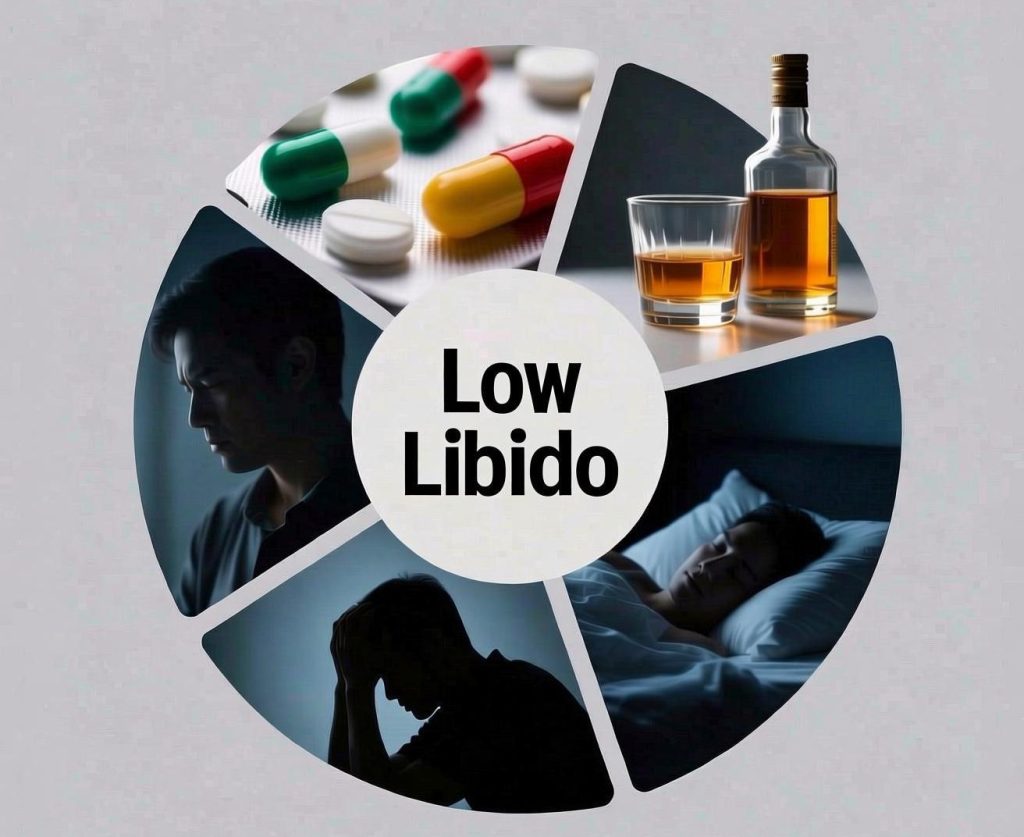

Porn itself doesn’t directly damage the penis or the blood vessels that produce erections, but heavy, compulsive use can absolutely interfere with arousal, performance, and confidence in real-life sex.
In other words, the connection is real for some men — but it’s mostly a brain-and-psychology story, not a physical one. Understanding how it works, whether it applies to you, and what you can do about it is far more useful than panic or shame.
What Actually Happens in Your Brain When You Watch Porn?
Erections begin in the brain, not the genitals. When you’re turned on, your brain releases dopamine, a chemical messenger that drives desire and signals the body to increase blood flow to the penis.
Porn — especially internet porn — delivers something real-life sex can’t compete with: endless novelty, instant escalation, and complete control.
Every swipe or click offers a new partner, a new scenario, a new intensity. Researchers describe this as a “supernormal stimulus,” meaning it’s actually more stimulating than the real thing it imitates.
When the reward system is hit with this level of stimulation repeatedly, two things can happen. First, the brain may become conditioned to respond to screens, camera angles, and rapid novelty rather than a warm, present human being.
Second, dopamine receptors can become less sensitive over time, meaning a man needs progressively more extreme or novel content to feel the same level of arousal.
Some heavy users report needing increasingly extreme material to get excited, and finding a real partner less stimulating by comparison.
This is why the condition is often called porn-induced erectile dysfunction (PIED). It’s classified as a psychological, not physical, form of ED — the plumbing usually works fine. Many men with PIED can get firm erections while masturbating to porn but struggle with a partner, which is a telling clue.
Can Watching porn Really Affect a Man’s Erectile Function?
Here’s where it gets honest: researchers genuinely disagree. Some studies find a clear association between problematic porn use and ED, while others find almost none. Both camps have credible evidence, and understanding the nuance helps you judge your own situation.
| Study / Review | Key Finding | Interpretation |
|---|---|---|
| Jacobs et al., 2021 (PMC review) | Higher scores for problematic porn use predicted higher probability of ED, even after controlling for other factors. | Compulsive use — not casual use — is linked to ED risk. |
| Rowland et al., 2023 (Nature/Andrology) | Frequency of porn use alone was unrelated to erectile functioning or ED severity. | How often you watch matters less than how you watch. |
| Park et al., 2016 (PMC) | Statistical comparison found internet porn use was not a significant risk factor for ED in young men. | Simple viewing doesn’t reliably cause ED on its own. |
| Sexual Medicine Society of North America | The idea that porn directly causes ED has been largely disproven; indirect psychological pathways (shame, comparison, performance anxiety) are more likely culprits. | The mind, not the mechanics, is where trouble starts. |
| Psychology Today review of multiple studies | Heavy use is linked to dissatisfaction with real-world sex; about 20% of male users need more extreme content over time for the same arousal. | Tolerance and desensitization affect a meaningful minority. |
The most balanced reading of the evidence: the amount of porn you watch matters far less than the pattern behind it. Occasional viewing alongside a healthy sex life shows little consistent harm.
Compulsive use, escalating extremity, using porn as the sole outlet, and pairing it with guilt or secrecy are the patterns most associated with erection trouble.
Porn Has a Profound Impact On Psychogenic ED
Even men who watch relatively little porn can develop erection problems because of what porn does to their head — not their body. Three psychological pathways come up again and again in clinical settings:
- Performance comparison. Porn performers are selected for size, stamina, and camera-friendly angles. Men who measure themselves against that curated image often develop insecurity about their own bodies, which directly fuels performance anxiety — one of the most common psychological causes of ED.
- Moral incongruence. Men who view porn but believe it’s wrong frequently experience shame, self-disgust, and guilt afterward. Interestingly, research suggests this “moral dissonance” — not the porn itself — predicts much of the distress and sexual difficulty these men report.
- Arousal template mismatch. Over time, some men find their brain has been trained on a very specific, high-intensity stimulus. A real partner with real quirks, real pacing, and real emotion may simply not register as exciting at first, leading to soft erections that further deepen anxiety.
There’s also a broader mental health connection. Problematic porn use has been linked with higher rates of anxiety, depression, and loneliness — all of which independently suppress libido and erectile function.
In some cases, porn becomes a coping mechanism for stress or low mood, and the underlying emotional weight is what actually undermines erections.
Signs Porn Might Be Behind Your Erection Problems
Not every erection issue traces back to porn, and jumping to that conclusion can cause you to miss something physical. That said, a few patterns strongly suggest porn is playing a role:
- You get firm erections watching porn but struggle with a partner — the classic situational split.
- You need progressively more extreme, novel, or longer sessions to feel aroused.
- Your interest in real-life sex has dropped, or you feel less attracted to your partner than you used to.
- You’ve tried to cut back and found you couldn’t, or you feel restless and preoccupied when you do.
- You feel shame after watching but keep doing it anyway.
- You’re still getting normal morning erections, which suggests the physical machinery is fine.
If none of these fit — if erections are unreliable in every context, including masturbation without porn, and morning erections have weakened too — the cause is more likely physical (blood pressure, cholesterol, diabetes, hormones, sleep) and warrants a medical check rather than a porn reset.
How to Break Free From The Influence of Porn?
The encouraging news is that porn-related erection issues are largely reversible, because the brain’s reward system is plastic and can recalibrate. Most men who commit to changes see meaningful improvement within a few months.
1. Take a structured break from porn
Think of it as giving your brain a chance to re-sensitize. A common framework is a 90-day reset, though honest clinicians will tell you timelines vary.
The first one to two weeks often bring the strongest cravings and mood swings; weeks three through six can feel like a “flatline” where libido seems to vanish — this is a normal part of recalibration, not a sign of damage. Most men notice real improvement in partnered function somewhere between week six and week twelve.
2. Relearn arousal without a screen
Masturbate without porn, more slowly, using touch and imagination. The goal is to recondition your arousal response to your own body and sensations rather than endless visual novelty. This is often the single most effective step.
3. Reduce the trigger environment
- Use content blockers on devices, especially during vulnerable hours (late night, alone, bored, stressed).
- Keep phones and laptops out of the bedroom.
- Identify your trigger moments — usually stress, boredom, loneliness, or insomnia — and have a specific alternative ready (walk, call a friend, gym, shower).
4. Address the psychology underneath
Shame is a terrible motivator and a powerful relapse trigger. If guilt is driving your cycle, working with a therapist — particularly one trained in sex therapy or cognitive behavioral therapy — can break it faster than white-knuckle abstinence. Couples counseling helps if the issue has created distance with a partner.
5. Support the physical side
Exercise (especially cardio), decent sleep, moderate alcohol, and not smoking all support vascular health and erectile function. A healthy body makes the psychological reset considerably easier.
6. Be patient with a real partner
Early on, sex with a partner may feel underwhelming compared to what your brain was used to. That’s expected. Communication, slowing down, and removing the pressure to “perform” typically restore responsiveness as the reset progresses.
When to See a Doctor
Self-help has its limits. See a urologist or your GP if erection difficulties persist for more than three months, if they occur in every context (including masturbation), if morning erections have disappeared, or if you have other symptoms like reduced libido, fatigue, or chest discomfort.
ED can be an early warning sign of cardiovascular disease — the small blood vessels in the penis often show plaque buildup before the heart’s do. Getting checked isn’t just about sex; it’s a genuine health screening.
A doctor can also rule out low testosterone, diabetes, medication side effects, and thyroid issues, and can discuss treatment options like PDE5 inhibitors while you work on the behavioral side.
Frequently Asked Questions
1. Does porn directly cause erectile dysfunction?
No — the penis isn’t damaged by watching porn, and the majority of studies find that frequency alone doesn’t predict ED. The link runs through the brain: conditioning, desensitization, comparison, shame, and performance anxiety. Men with compulsive patterns or heavy escalation are the ones most likely to notice real-world difficulties.
2. How long does recovery take after quitting porn?
Most research on psychologically driven ED shows substantial improvement within one to three months. Commonly reported patterns include cravings and mood swings in weeks one to two, a possible libido “flatline” in weeks three to six, and noticeable improvement in partnered function around the 8–12 week mark. Full recalibration can take longer, and younger men often recover faster.
3. Can porn use cause permanent erectile damage?
There’s no evidence that watching porn causes permanent physical damage to erectile tissue. The mechanisms involved are neurological and psychological, both of which are reversible.
However, if an underlying physical cause (vascular disease, diabetes, hormonal issues) is present and untreated, that condition can worsen over time — which is why persistent symptoms deserve a medical evaluation.
4. What if I watch porn with my partner — is that different?
For many couples, shared viewing doesn’t cause problems and can even enhance arousal. Difficulties tend to emerge when one partner secretly watches, when content preferences clash, when porn becomes a substitute for intimacy rather than a supplement, or when one partner’s expectations shift because of what they’ve watched alone. Context and honesty matter more than the act itself.
5. Should I take ED medication if I think porn is the cause?
Medication like sildenafil or tadalafil can help in the short term and may reduce the performance anxiety that keeps the cycle going.
But if the root cause is psychological conditioning from porn, pills alone won’t fix it — and relying on them can create its own anxiety. A combined approach (behavioral reset, possibly therapy, medication as a bridge if a doctor recommends it) tends to work best.
The bottom line
Porn isn’t a villain that wrecks every man it touches, but it can quietly rewire arousal in ways that make real sex harder for some.
If your erections are telling you something has shifted, listen — reduce the screen, rebuild real intimacy, give your brain a few months, and get a medical checkup to rule out anything physical.
The combination of honesty, patience, and a little professional guidance resolves this for the large majority of men who deal with it.