
The Emerging Link: Pelvic Floor & Core Stability
Erectile dysfunction (ED) can be a deeply distressing issue for men, impacting not just physical intimacy but also self-esteem and overall quality of life.
While medical interventions like medication and surgery often come to mind, a growing body of evidence points toward a surprisingly powerful, non-invasive tool: targeted exercise, particularly hip thrusts.
This isn’t just about building bigger glutes; it’s about strengthening the intricate network of muscles that support the pelvic floor, core, and lower back – all intimately connected to erectile function.
Traditionally, ED has been viewed through a vascular lens, focusing on blood flow issues. However, a “pelvic floor and core dysfunction” model is gaining traction.
This model suggests that weak pelvic floor muscles, dysfunctional abdominal muscles, and poor hip stability can contribute significantly to ED, sometimes independently of, and sometimes in conjunction with, vascular issues.
The pelvic floor muscles, including the bulbospongiosus and ischiocavernosus muscles, directly contribute to the rigidity and maintenance of an erection. Weakness here can impair this function.
Anatomy & Biomechanics: Why Hip Thrusts Matter
Let’s break down the anatomy. The pelvic floor isn’t a single muscle; it’s a complex sling of muscles supporting the bladder, bowel, and reproductive organs. Hip thrusts, when performed correctly, engage this entire system. Consider these key muscle groups:
- Gluteus Maximus: The powerhouse of the hip thrust, providing hip extension and stability.
- Gluteus Medius & Minimus: These abductors stabilize the pelvis and prevent it from dropping on one side, crucial for maintaining a stable base during the exercise and for overall pelvic stability.
- Hamstrings: Contribute to hip extension and pelvic stability.
- Adductors: Inner thigh muscles, assist in pelvic stability and control.
- Core Muscles (Transverse Abdominis, Obliques, Rectus Abdominis): Engaged to stabilize the spine and pelvis throughout the movement.
- Pelvic Floor Muscles: These are co-contract during the exercise. That means they work with the other muscles to stabilize the pelvis and maintain intra-abdominal pressure. This co-contraction is vital for strengthening and training the pelvic floor in a functional way.
The biomechanics are straightforward: a hip thrust elevates the hips off the floor while maintaining a stable spine and pelvis. This requires coordinated muscle activation – if one area is weak, the others have to compensate, potentially leading to inefficient movement patterns and, over time, contributing to dysfunction.
The Physical Therapist’s Perspective: Core & Pelvic Floor Rehabilitation
Physical therapists specializing in pelvic floor rehabilitation often use hip thrusts (and progressions) as a cornerstone of their treatment plans for men with ED related to pelvic floor dysfunction. Here’s their perspective:
“We see a lot of men who have a ‘type 2′ pelvic floor dysfunction,” explains Dr. Emily Carter, a specialized pelvic floor physical therapist. “This isn’t about urinary incontinence or prolapse; it’s about pelvic floor hypotonicity – weakness. Often, these men also have a ‘breathing dysfunction’— shallow, rib-cage breathing that limits core stability. Hip thrusts, when prescribed and performed correctly, can address both issues. The focus isn’t just on the glutes; it’s on the entire kinetic chain and the coordinated activation of the pelvic floor.”
Key techniques used by PTs include:
- Breathing Retraining: Diaphragmatic breathing to enhance core stability.
- Pelvic Floor Muscle Training (PFMT): Conscious contraction and relaxation of the pelvic floor muscles, often incorporated during the hip thrust exercise. Biofeedback may be used initially to ensure correct muscle activation.
- Progressive Overload: Gradually increasing the weight, reps, or difficulty of the hip thrusts.
- Neuromuscular Re-education: Focusing on proper movement patterns and muscle coordination.
The Urologist’s View: A Holistic Approach
Urologists are increasingly recognizing the limitations of solely treating ED with pharmaceuticals. Dr. David Lee, a urologist researching non-pharmacological interventions, states: “We need to broaden our perspective. While medications can often provide symptomatic relief, they don’t address the underlying causes in all patients. Pelvic floor dysfunction is a significant contributor to ED in a subset of men, and targeted exercise programs, like those incorporating hip thrusts, are a safe and potentially effective adjunct to traditional treatments.”
Urologists may refer patients to pelvic floor physical therapists for targeted rehabilitation, especially when:
- ED is present despite adequate vascular health.
- The patient experiences pain with erections.
- There is a history of pelvic trauma or surgery.
- The patient prefers non-pharmacological interventions.
The Fitness Professional’s Guide: Proper Form & Progression
Simply performing hip thrusts with a heavy weight isn’t enough. Proper form and progressive overload are crucial. Here’s a guide for fitness professionals (and motivated individuals):
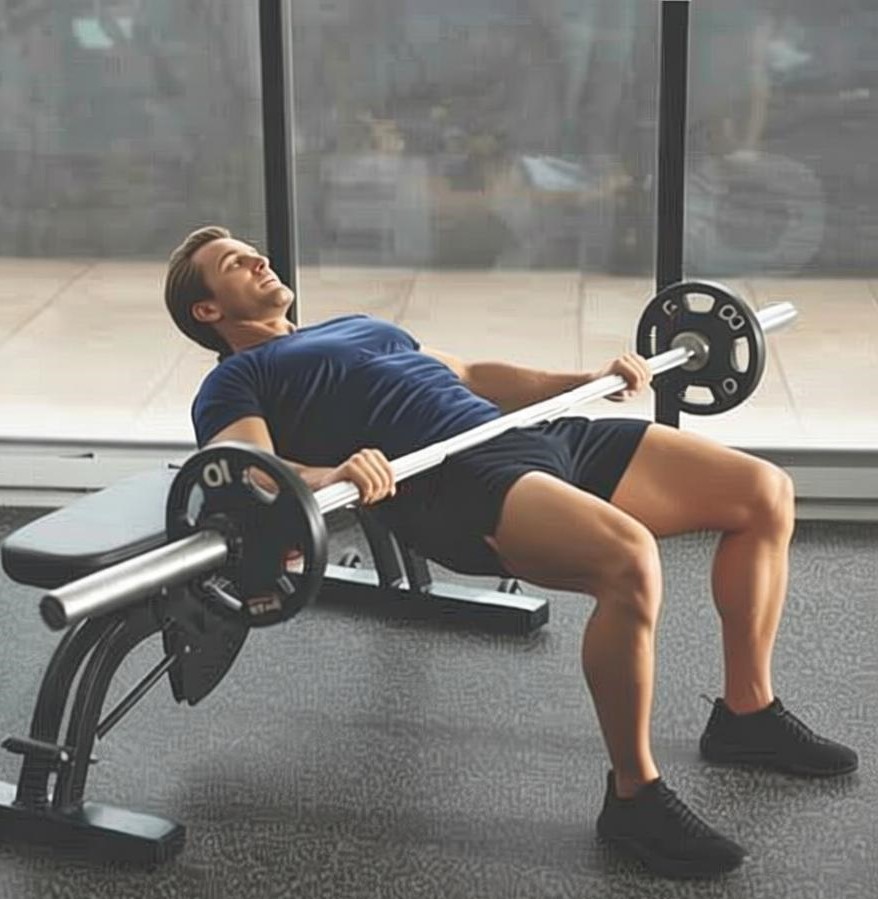
- Starting Position: Lie on your back with knees bent and feet flat on the floor, hip width apart. A pad under your shoulders can help maintain the natural curve of your back.
- Core Engagement: Before lifting your hips, brace your core as if preparing to be punched in the stomach.
- Hip Elevation: Drive through your heels to lift your hips off the floor, squeezing your glutes at the top. Maintain a straight line from your shoulders to your knees.
- Controlled Descent: Slowly lower your hips back to the floor, controlling the movement throughout.
- Progression: Start with bodyweight hip thrusts and gradually increase the weight as you get stronger. Variations include single-leg hip thrusts, banded hip thrusts, and hip thrusts on unstable surfaces (e.g., a stability ball).
Common Mistakes to Avoid: Arching the back, letting the hips sag, not engaging the core, and using momentum instead of muscle control.
Patient Experiences: Hope & Empowerment
“I felt like I’d tried everything,” recounts Mark, a 48-year-old patient who struggled with ED for years. “Medication didn’t work long-term, and the side effects were concerning. My urologist suggested pelvic floor physical therapy, and I was skeptical at first. But incorporating hip thrusts into my routine, along with breathing exercises, actually made a difference. It wasn’t a miracle cure, but it improved my confidence and overall function. It was empowering to feel like I was taking an active role in my health.”
The Science Behind the Strength: Research & Evidence
While research specifically on hip thrusts and ED is still emerging, there’s a growing body of evidence supporting the benefits of pelvic floor muscle training and core strengthening for erectile function.
A 2018 study published in The Journal of Sexual Medicine found that pelvic floor muscle exercises significantly improved ED symptoms in men with mild to moderate dysfunction. While this study didn’t directly assess hip thrusts, it supports the underlying principle of strengthening the pelvic floor.
Furthermore, studies on core stability and pelvic floor coordination have shown improvements in pelvic floor muscle function and sexual satisfaction. The mechanism is likely multifactorial: improved pelvic floor muscle strength, enhanced blood flow, and increased neuromuscular control.
Important Considerations & Cautions
Before starting any new exercise program, it’s crucial to consult with a healthcare professional, especially if you have underlying medical conditions. Here are some important considerations:
- Medical Evaluation: Rule out any underlying vascular or hormonal issues that may be contributing to ED.
- Pelvic Floor Assessment: A pelvic floor physical therapist can assess your pelvic floor muscle function and develop a personalized treatment plan.
- Proper Technique: Incorrect form can lead to injury. Consider working with a qualified professional to ensure proper technique.
- Gradual Progression: Start slowly and gradually increase the intensity and duration of your workouts.
- Pain Management: If you experience any pain during the exercises, stop and consult with a healthcare professional.
The Future of Treatment: Integrated Approaches
The integration of pelvic floor rehabilitation, including exercises like hip thrusts, into the standard treatment protocol for ED is a promising direction. Future research should focus on:
- Specific Hip Thrust Protocols: Determining the optimal number of sets, reps, and progressions for maximizing benefits.
- Longitudinal Studies: Evaluating the long-term effects of hip thrusts on ED symptoms and overall quality of life.
- Personalized Treatment Plans: Tailoring exercise programs based on individual patient needs and pelvic floor muscle function.
IMPORTANT DISCLAIMER: This article is for informational purposes only and does not constitute medical advice. Erectile dysfunction can be a complex issue with various underlying causes. Always consult with a qualified healthcare professional (urologist, pelvic floor physical therapist, or your primary care physician) for diagnosis and treatment of any medical condition. This article is not a substitute for professional medical advice. The information provided here should not be used as a basis for self-diagnosis or self-treatment. Individual results may vary, and there are no guarantees of success. Do not start any new exercise program without consulting your doctor first, especially if you have pre-existing medical conditions. This article is not intended to promote or endorse any specific product or treatment.